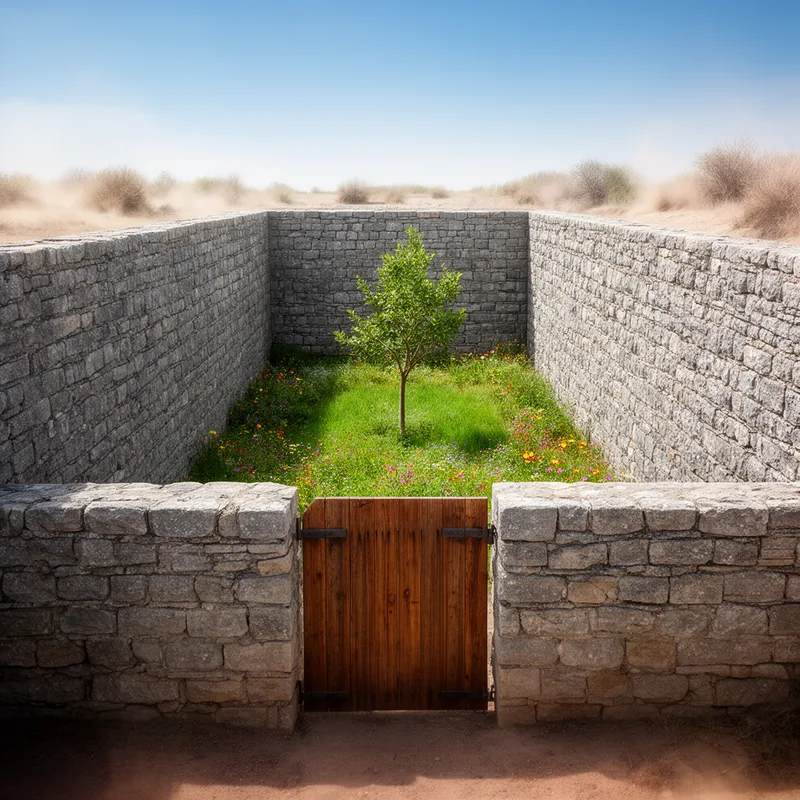
to inclose

to inclose

7.8
Surround something completely on all sides to shut it in
  • verb
  • /ɪnˈkloʊz/
  • Archaic
translation icon : encerrar
  • A high wooden fence was built to inclose the area for privacy.

Examples

  • They decided to inclose the patio with glass walls.

  • The old stone walls inclose the ancient garden, protecting it from the wind.

  • At night, a sense of fear seemed to inclose the deserted village.

  • Why did you inclose the pool area?

  • The old stone walls inclose the ancient garden, protecting it from the wind.

  • A high wooden fence was built to inclose the area for privacy.

  • They decided to inclose the patio with glass walls.

Synonyms

to close in
vsto inclose
119 4.6

Surround or enclose a place by bringing things nearer from all sides
describes surrounding on all sides as a state, not the moving action
to enclose
vsto inclose
84 3.7

Surround something completely, often with a wall or fence

is more general and can mean surrounding without built barriers
to envelop
vsto inclose
41 4.5

To surround something completely, like fog or darkness

is about making a space that prevents leaving
to encase
vsto inclose
34 4.9

To cover something completely so nothing can get in or out

means simple surrounding, not necessarily a solid protective shell
to close off
vsto inclose
24 3.9

Stop people or vehicles from entering a place

is about complete surrounding rather than only blocking an entrance
to seal in
vsto inclose
15 3.9

Close something tightly so air, water, or flavor cannot escape

is about surrounding space, not specifically keeping internal contents
to close up
vsto inclose
15 3.7

To bring the edges of something together so there is no gap

refers to surrounding all around, not merely joining edges together
to seal off
vsto inclose
3 3.7

Close something tightly so nothing can get in or out
focuses on surrounding all sides rather than only blocking access
to environ
vsto inclose
1 8.8

To surround something on all sides

is about forming a complete closed space rather than a border
to shut in
vsto inclose
5.1

Surround something completely so it cannot get out or move

is about surrounding completely without necessarily preventing movement
to englobe
vsto inclose
8.4

Completely surround something, often in a round shape like a ball

does not require a rounded shape and applies to any form of surrounding

Antonyms

1.0

To make something not closed so you can get in

1.8

To let someone or something go free from being held

How Enclosed

to seal
457 2.5
to inclose
  • Archaic
7.8
to encircle
33 3.4
to surround
1.7
to border
46 2.3

Surface Forms

inclose infinitive
enclosed past
enclosed past participle
enclosing present participle
incloses third person singular

Morphology

inclose = close (semi-transparent) = in + close

The connection to 'close' is recognizable, but the specific verb sense 'surround or shut in' and the unusual spelling make the derivation less fully obvious to learners.

Etymology

Inclose comes from the parts in- 'in' and close 'shut'. It is like the word enclose, so to inclose something is to shut it in or surround it on all sides.