
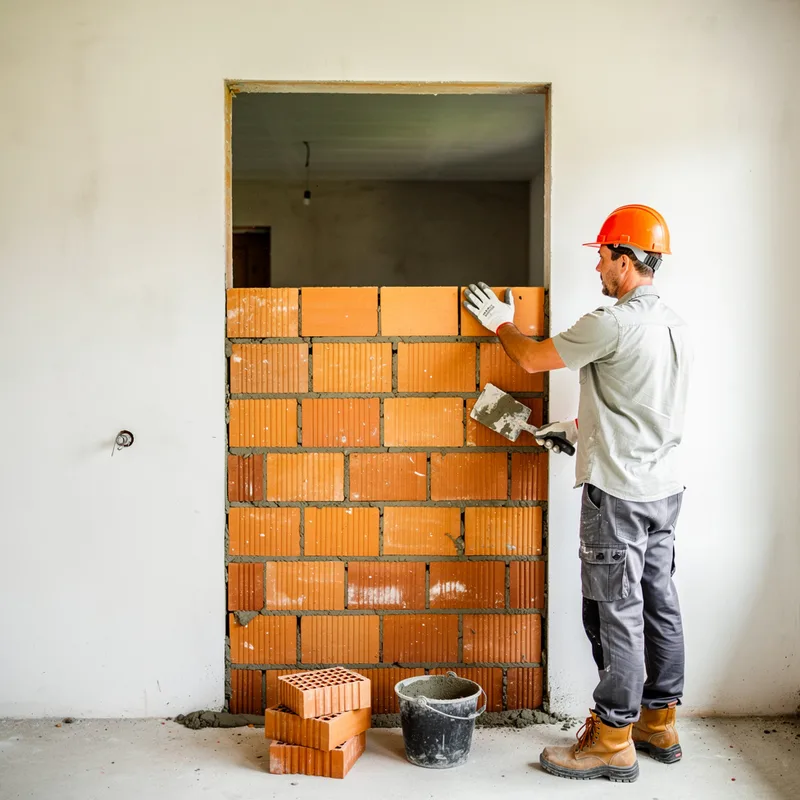
to wall up
 3
6.1
3
6.1

- phrasal verb
- /wɔl ʌp/
- It had, in fact, been walled up by just a thin layer of mud and sticks.
Examples
-
For the past 11 years, I've been walled up alive on a desert island.
-
My grandfather must have walled it up before he lost the house.
-
Why did they wall it up again?
-
We had to wall it up, seal it shut.
-
And until they put that wall up, you know I'll be here defending my land.
-
Until old McGregor came and put that wall up.
-
She must have walled this place up before she skedaddled.
-
After a notch was filled, the outlet from the ramp to the L-shaped room was walled up from the inside with blocks and mortar.
Academic text (2009) -
The ghetto, an area of a small city block, was sealed off by walled-up buildings, blockades, and barbed wire, and six months later, eighteen thousand people were imprisoned there.
Fiction book (2001) -
The construction crew decided to wall up the old entrance to prevent any unauthorized access.
Synonyms
 84
3.7
84
3.7
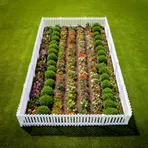
Surround something completely, often with a wall or fence
 41
6.4
41
6.4
To surround an area with a wall to protect it
 26
3.8
26
3.8
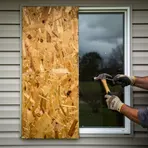
Cover windows or doors with pieces of wood to protect them
 15
3.7
15
3.7
To bring the edges of something together so there is no gap
 7
5.8
7
5.8
To build a barrier around something to keep people in or keep others out
 4
3.8
4
3.8
To stop movement through a road, pipe, or path
 2
5.2
2
5.2
To close an opening by building a solid wall of blocks
 1
7.0
1
7.0
To close an opening by building a wall of bricks across it


 1
6.7
1
6.7
To close an opening like a door or window by building a brick wall across it
How Sealed
457
2.5
 3
6.1
42
4.8
∞
1.0
∞
3.0
119
5.1
3
6.1
42
4.8
∞
1.0
∞
3.0
119
5.1
Surface Forms
Morphology
wall + up
The verb 'wall' (to enclose with a wall) combined with the particle 'up' (a common completive/sealing marker) yields a meaning that is directly compositional: to enclose or seal off by building a wall. This motion/particle composition is a common, cross-linguistic pattern, so a B1 learner who knows the constituents would readily infer the MWE meaning.
Etymology
Wall up comes from the simple image of building a wall to close something up. Workers put bricks across a doorway or window to block it, so today it means 'to enclose or seal off' an area or opening.