
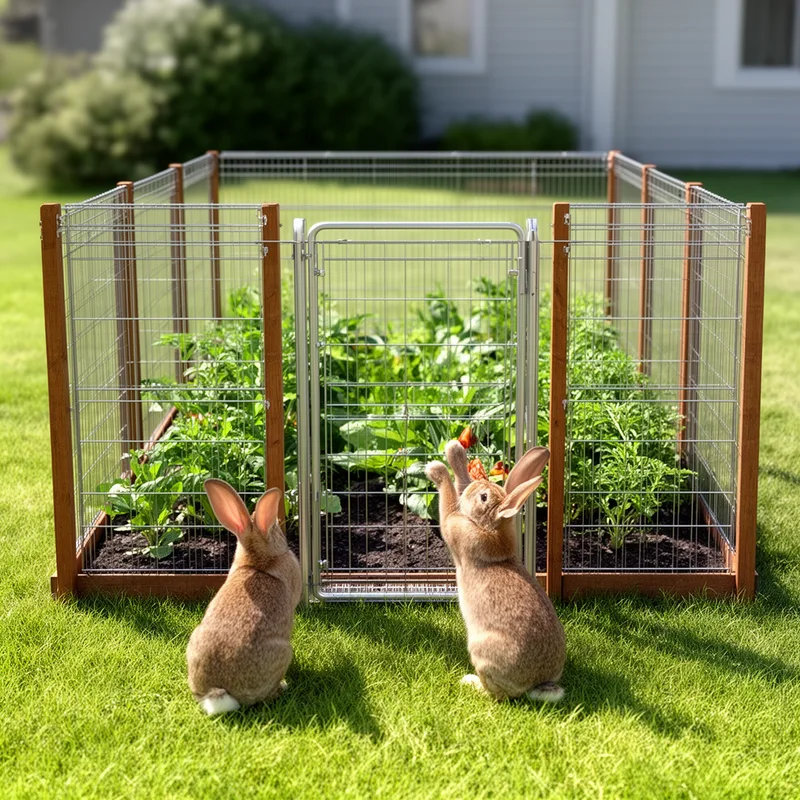
to fence in
 3
3.0
3
3.0

- phrasal verb
- /fɛns ɪn/
- I mean it's a community within the outskirts of the city that's completely fenced in and has a guard.
- fence in their cattle
- fence in their property
- fenced in 500 acres
Loading YouTube…
Watch on YouTubeYou have a a real backyard, fenced in grass, plenty of it.
- You have a a real backyard, fenced in grass, plenty of it.
- So there is a fenced in area there.
- Well, and I think also the the intention behind trying to sort of fence you in is really what the warning signs are about with these.
- Our minds are prepared to read white words in English over a river of voices fenced in behind them, images dancing through puffs of white letters.
- You know, 'cause like the house was structured to where it was, like my parents room was in the back, you know, like where the backyard is and it's all fenced in.
- The containment area is just this fenced in area where you could go and you could repair your tires, gas up, whatever.
Examples
-
And the owner fenced in the front yard, making for a cozy patio.
Blog text (27) -
As part of the landscaping project, they plan to fence in the backyard for more privacy.
-
For the time being, they want to fence in all their land.
-
It's all fenced in, the entire compound.
-
We'll definitely need to fence it in, though, to keep the critters at bay.
Blog text (20) -
Mrs. Baker, the zoo CEO or whatever, said they just escaped to a backyard that was also fenced in.
Blog text (21) -
It was, however, difficult to establish ownership rules and much too expensive to fence in the herds.
Academic text (1996) -
By then he'd fenced in yet another part of the Graycloud land holdings.
Fiction book (1990) -
There was lingering frustration over the fact that a portion of the park remained fenced in, despite all the renovation work that's taken place.
Blog text (25) -
He rebuilt his old drying barn into kennels and fenced in some pens out in front of it.
Fiction book (1990)
Synonyms
 ∞
1.7
∞
1.7
To be all around a person or thing on every side
 84
3.7
84
3.7
Surround something completely, often with a wall or fence
 70
3.9
70
3.9
To keep something inside so it cannot escape by closing or locking
 47
3.9
47
3.9
Stop people from entering or leaving an area by blocking it
 42
4.8
42
4.8
To stop people from entering a place by putting up a barrier
 41
6.4
41
6.4
To surround an area with a wall to protect it
 24
5.8
24
5.8
To block off an area with people or barriers to keep people away
 20
6.3
20
6.3
Stop people entering or leaving an area by using police and barriers
 19
2.4
19
2.4
To put a barrier around land to mark or protect it
 7
5.8
7
5.8
To build a barrier around something to keep people in or keep others out
 7
1.8
7
1.8
To make a barrier of wood, metal, or wire around land to keep animals and people out
 4
3.7
4
3.7
Surround an area with a fence to stop people from entering
 2
5.4
2
5.4
To put someone or something into a small space with bars to stop them moving freely
 1
5.7
1
5.7
To enclose an area by putting up rails

To surround a place with rails or a fence for protection
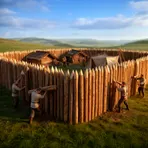
To surround an area with a strong fence of wooden or metal posts for protection

Surround a place or person so they cannot move freely

To build a wall around something to protect or separate it

An area in a room or building separated from others by a hanging cloth to give privacy

Surround something completely so it cannot get out or move
Antonyms


How Enclosed


Surface Forms
Morphology
The meaning 'to enclose an area with a fence' is directly derivable from combining 'fence' (to erect a barrier) with 'in' (indicating inside or within boundaries). This verb + preposition composition is a straightforward, cross-linguistically common pattern, so a B1 learner who knows the constituents will readily infer the MWE's meaning.
Etymology
Fence in comes from the simple image of putting a fence around a place to close it in, like surrounding a garden so animals cannot get inside. That's why it means 'to enclose' or 'to keep something or someone inside for protection or privacy'.