
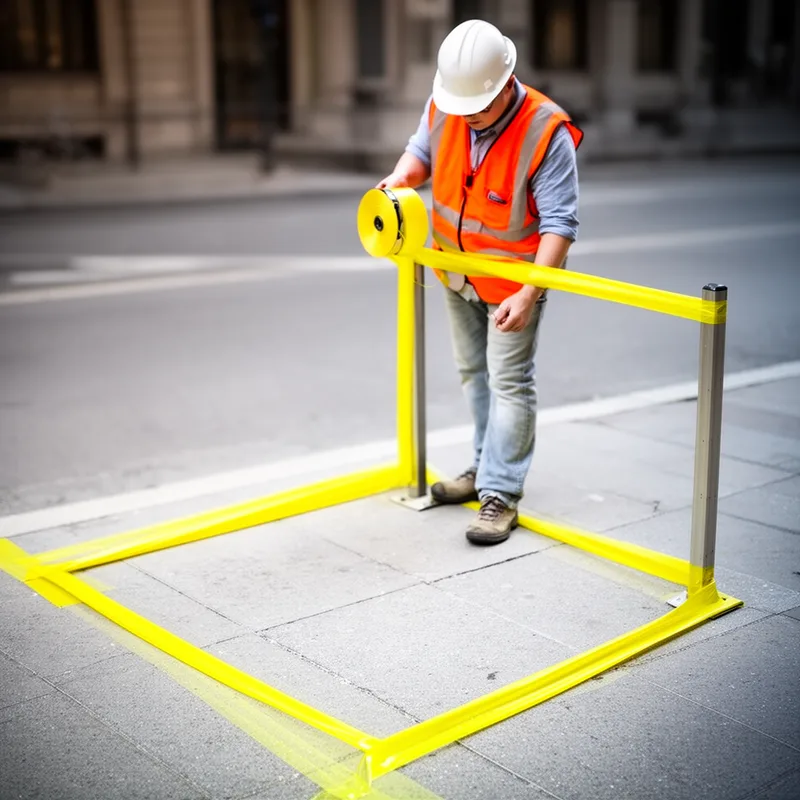
to mark off


 1
3.4
1
3.4
- phrasal verb
- Place buoys to mark off the area and place caution signs around the area stating the dangers of being close to the seaway/taxiway.
- mark off a boundary
Loading YouTube…
Watch on YouTubeHe says into these species, animal is marked off by division.
- He says into these species, animal is marked off by division.
- They had like the parking spots marked off for valet, like you couldn't park there during the day or whatever.
- We have neurons, nerve cells in our eye, in our brain and in our body that are marking off the passage of time throughout the year.
Examples
-
The reason we do that is because we're going to be marking off our X axis.
-
Time isn't on the graph, but we could mark off times.
-
A designated feeding area was established, and this area was marked off with signs and buoys (Figure 2).
Academic text (1998) -
I mark off my grid and dig in my hole as usual, scraping delicately, brushing.
Fiction book (2002) -
The teacher asked us to mark off the sections of our worksheets to organize our answers more clearly.
-
Before painting the wall, he will mark off the area with tape to ensure clean lines.
-
During the renovation, they marked off the sections of the floor that would be replaced.
Synonyms
 192
1.0
192
1.0
Make a visible line, spot, or sign on a surface
 65
3.2
65
3.2
To draw the outer edge of something
 8
3.8
8
3.8
Set a clear limit on what is acceptable
 4
4.0
4
4.0
Show the edges of an area, for example with string or chalk
 4
7.9
4
7.9
To mark the border between two areas with a line or fence
 2
7.0
2
7.0
To draw the shape or edge of something clearly
 1
3.9
1
3.9
To show the line that separates two places
 1
7.0
1
7.0
To mark the edges of an area or idea

Set or mark the limits of an area like a project

To show the limits of something, for example an area or duties

To make a clear line between two areas or kinds of activity

To make part of a room private by closing a curtain
Antonyms


How Defined

Surface Forms
Morphology
The meaning 'to draw lines or set boundaries' is directly derivable from combining 'mark' (to label or make a sign) with the particle 'off' which here signals separation or division; together they convey marking something as separate. This is a regular, compositional phrasal-verb pattern that a B1 learner who knows both constituents would readily understand.
Etymology
Mark off The phrasal verb mark off comes from drawing a line or putting tape to mark an area and set it off from the rest. That's why it means 'to separate' or 'to set a boundary'.