

to delimit
 1
7.0
1
7.0

- verb
- /dɪˈlɪmɪt/
- Formal
- To accomplish this task, XML "tags" enclose (delimit) each fact or item of data generated.
- delimit the boundaries
- delimit the scope
- delimit the area
Examples
-
The geographical scale is undoubtedly important when delimiting the region of study in CP.
Academic text (2011) -
UNCLOS itself provides little guidance for delimiting maritime boundaries.
Academic text (2005) -
So the concern is always that of trying to delimit an area where there is some common ground between his experiences and ours.
-
No easy way presents itself to delimit the area without cutting off some more or less vital transactions.
Academic text (1992) -
Included in the scenario are constraints identified to delimit the project objectives.
Academic text (2010) -
Consequently, so do attempts to delimit conflict and control its escalation.
Academic text (1990) -
The act of delimiting their land has been an awareness-raising exercise for many local communities.
Academic text (1996) -
Other surveys have been coordinated to examine the geographic patterns of abundance in addition to delimiting geographic ranges.
Academic text (2007) -
The local government plans to delimit the park boundaries to ensure it is properly maintained.
-
We need to delimit the project scope before starting the planning process.
Synonyms
 ∞
2.1
∞
2.1
To control how much or how often something happens
 878
1.0
878
1.0
To say exactly what something is or what it means
 11
5.3
11
5.3
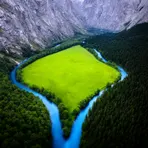
To form the edge or limit of an area
 8
3.8
8
3.8
Set a clear limit on what is acceptable
 6
8.1
6
8.1
To keep something within certain limits
 4
4.0
4
4.0
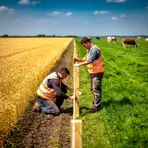
Show the edges of an area, for example with string or chalk
 4
7.9
4
7.9
To mark the border between two areas with a line or fence
 2
7.0
2
7.0
To draw the shape or edge of something clearly
 1
3.9
1
3.9
To show the line that separates two places

 1
3.4
1
3.4
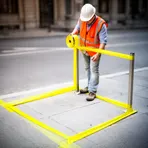
To draw lines or put tape to show the edge of an area

To show the limits of something, for example an area or duties

Set or mark the limits of an area like a project

To make a clear line between two areas or kinds of activity
How Precise

Surface Forms
Morphology
Etymology
Delimit comes from the parts de- and limit, where limit means 'boundary' or 'end'. So to delimit is to mark or set the edges or borders of something, which is why we use it for defining what is inside or outside a project or idea.