

to seal off
 47
3.9
47
3.9

- phrasal verb
- /siːl ɔf/
- All access to this floor has been sealed off until further notice.
Loading YouTube…
Watch on YouTubeSo that way we've just got as much of the hole sealed off to prevent any sound leaking in.
- So that way we've just got as much of the hole sealed off to prevent any sound leaking in.
- Because it is such a huge and sealed off device, I'm a bit concerned about the audio potential here.
- I get to the when I get there, he's his things all sealed off, right.
- And then it was under trying to think like a walkway of shops either side and it was sealing off.
Examples
-
After the hazardous chemical spill, workers sealed off the factory to prevent anyone from entering.
-
The police already had the area sealed off, but it did them no good.
Fiction book (2002) -
Sir, they sealed off this wing at both ends.
-
Seal off the whole area.
-
During these detentions, Kasama town was sealed off by the armed forces.
Academic text (2006) -
The frightened crowd mills about in terror as Dorian's thugs seal off the exits.
Fiction book (1994) -
To kill the mobility of falsehoods or dangerous information, the state sealed off the countryside using roadblocks and militia bases.
Academic text (2009) -
The police sealed off the street to investigate the robbery, ensuring no one could enter the area.
-
The firefighters sealed off the surrounding blocks while they battled the large blaze.
Synonyms
 ∞
1.0
∞
1.0
To shut something so it is not open
 457
2.5
457
2.5
To close something tightly to stop air or water getting in
 172
1.3
172
1.3
To stop people or things from entering a place
 84
3.7
84
3.7
Surround something completely, often with a wall or fence
 43
4.8
43
4.8
To put a person, animal, or place away from others to stop disease spreading
 42
4.8
42
4.8
To stop people from entering a place by putting up a barrier
 24
3.9
24
3.9
Stop people or vehicles from entering a place
 24
5.8
24
5.8
To block off an area with people or barriers to keep people away
 23
3.8
23
3.8
Close a road, path or entrance so people cannot go through
 20
6.3
20
6.3
Stop people entering or leaving an area by using police and barriers
 11
4.0
11
4.0
Prevent someone or somewhere from having contact with others
 9
6.0
9
6.0
To stop people and goods entering or leaving a place, often during war
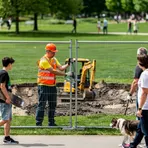 4
3.7
4
3.7
Surround an area with a fence to stop people from entering
 3
3.0
3
3.0
To surround an area with a barrier to keep others out
 3
4.8
3
4.8
To keep people out of an area by putting ropes around it
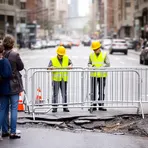
To block a place so people cannot enter, often by putting up a fence
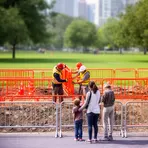
To separate people or part of a place by putting up a barrier

Keep people or places apart to stop disease spreading
Antonyms


How Restricted
- Specialized
8
4.1
 43
4.8
47
3.9
20
6.3
∞
3.0
43
4.8
47
3.9
20
6.3
∞
3.0
Surface Forms
Morphology
The meaning 'to make something tightly closed or secure' is directly derivable from combining 'seal' (to make airtight/watertight) with the particle 'off' (indicating closure, removal, or isolation), so the sense is compositional and predictable. This is a regular verb+particle construction common in English (and with parallels in other languages), so a B1 learner who knows both constituents would very likely infer the MWE's meaning.
Etymology
Seal off may come from the image of putting a strong seal across a door or street to keep people off that place. That's why it means 'to stop people from entering or leaving'.