
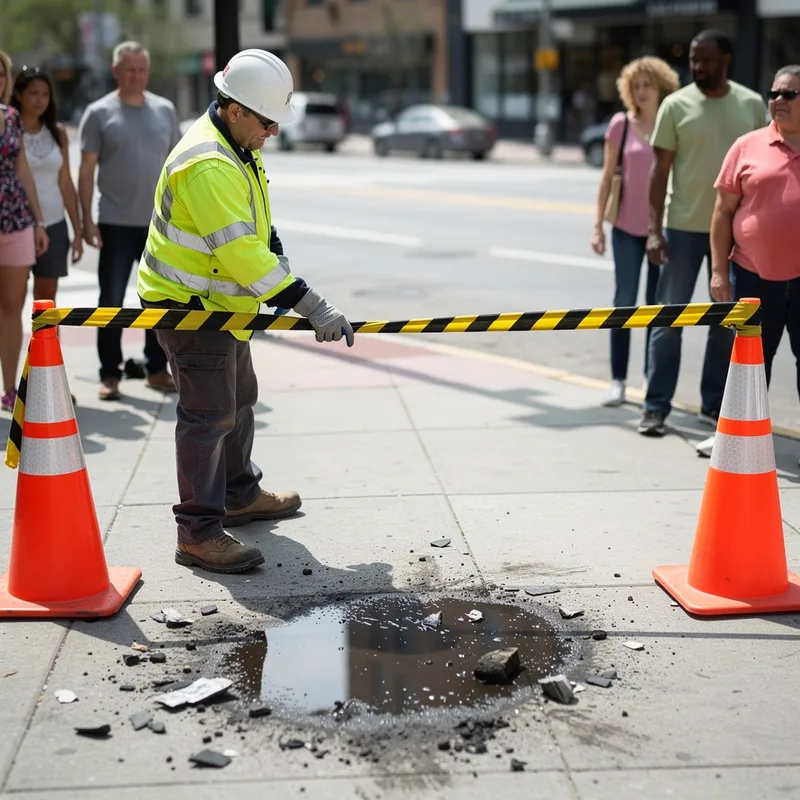
to rope off
 3
4.8
3
4.8

- phrasal verb
- /roʊp ɔf/
- The area around it was roped off.
- roped off area
- roped off section
- roped off the crime scene
Loading YouTube…
Watch on YouTubeAnd then like the strip clubs, I had these like roped off sections.
- And then like the strip clubs, I had these like roped off sections.
Examples
-
A crime scene area near the garbage cans is roped off.
Fiction book (1995) -
Beyond that was a larger roped-off area with a green carpet on the floor and over three dozen folding chairs.
Fiction book (2002) -
Police are roping off the area with "CRIME SCENE" tape.
Fiction book (2000) -
An area close to the mound is roped off for news reporters and cameras.
Fiction book (1993) -
Jeffrey is out with Detective Williams and a crew of officers who have roped off the area and are doing a grid search.
Fiction book (1997) -
There are three tables in a roped-off section of the restaurant with large floral centerpieces and a small bar in the corner.
Fiction book (1999) -
A large area was roped off, dedicated to Harrison Fielding III, his parents, grandparents, and all their various offspring.
Fiction book (2000) -
The beachhead was already roped off in several places atop the bluff, mostly to the north, toward the motel.
Fiction book (1999) -
Waiters in white aprons attend to a cluster of little white tables roped off from the relentless crush of Sunday morning pedestrians.
Fiction book (2000) -
The lawn in front of the school was roped off to protect the grass from foot traffic.
Synonyms
 47
3.9
47
3.9
Stop people from entering or leaving an area by blocking it
 24
3.9
24
3.9
Stop people or vehicles from entering a place
 24
5.8
24
5.8
To block off an area with people or barriers to keep people away
 23
3.8
23
3.8
Close a road, path or entrance so people cannot go through
 20
6.3
20
6.3
Stop people entering or leaving an area by using police and barriers
 4
3.7
4
3.7
Surround an area with a fence to stop people from entering
Mark an area with a rope to keep people out
To separate people or part of a place by putting up a barrier
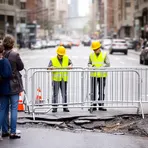
To block a place so people cannot enter, often by putting up a fence

To make part of a room private by closing a curtain
Antonyms

How Restricted


Surface Forms
Morphology
The meaning 'to separate or restrict access by putting ropes around an area' is directly derived from combining 'rope' (to bind or tie with rope) with the particle 'off' indicating separation or removal. This is a concrete, compositional action following common English verb+particle patterns, so a B1 learner who knows both constituents can reasonably infer the meaning.
Etymology
The phrasal verb rope off comes from literally using a rope to keep people off an area. Imagine workers stretching a rope around a dangerous spot to stop people from entering, so the phrase means 'to keep people away from a place'.