

to lock in
 70
3.9
70
3.9

- phrasal verb
- /lɑk ɪn/
 :
encerrar
:
encerrar
- Ian and an employee, Jaquanda, we're locked in the office.
You also need lockers so you can lock in the the tablets at night.
- You also need lockers so you can lock in the the tablets at night.
- Don't forget I locked myself in my room every night.
- She ends up being locked in the upstairs attic by the husband.
- That scene where Kronk is locked in the closet at Cusco's house.
- Just not me and I'm locked in this room until I'm out.
- So freezing something after you bake it will actually lock in moisture and not.
- You place that center column back down, lock it in, you are level good to go.
- Dude, we started in February, locking cats in.
- And I can't imagine being locked in a stuff with one person.
Examples
-
One was opened, and they were locked in a frozen, lightless room.
Fiction book (1992) -
Don't forget I locked myself in my room every night.
-
Go to the house and lock yourself in.
-
It's okay in the day, but lock yourself in.
-
Well, Robert went out to look for you and Laura locked herself in her bathroom eight hours ago.
-
These men and I, we will round up the suspects and lock them in my holding cells.
-
I'm gonna lock you in your room, you little monster.
-
She ends up being locked in the upstairs attic by the husband.
-
Lock my skis in the car so they don't get ripped off.
-
The child was locked in her room for not finishing her homework.
Synonyms
 ∞
1.0
∞
1.0
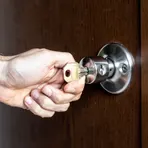
To fasten something with a key so other people cannot open it
 347
3.3
347
3.3
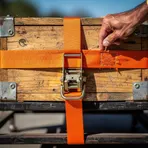
To fasten firmly so it cannot move or be taken
 300
4.0
300
4.0
Put someone or something in a place where they cannot leave, for example a jail
 115
5.8
115
5.8
To lock someone in prison or a secure place
 50
5.5
50
5.5
Lock someone inside a place so they cannot leave
 35
6.2
35
6.2
To restrain someone with chains or limit their freedom
 32
3.4
32
3.4
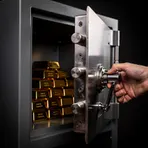
Put someone or something somewhere they cannot leave and others cannot reach
 15
3.9
15
3.9
Close something tightly so air, water, or flavor cannot escape
 11
3.4
11
3.4
To fasten something using a small metal lock with a U-shaped bar
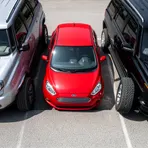 8
4.7
8
4.7
To stop a person or thing from moving, acting freely and making choices
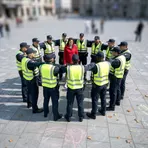 6
6.7
6
6.7
Surround a person or thing so they cannot leave
 3
2.7
3
2.7
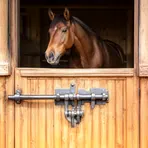
To slide a metal bar across a door to keep it closed
 3
3.7
3
3.7
Close something tightly so nothing can get in or out
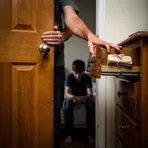 3
5.5
3
5.5
Keep people and things in a place where they cannot leave or be seen
 2
5.4
2
5.4
To put someone or something into a small space with bars to stop them moving freely
 1
1.9
1
1.9
Close something tightly so nothing can get in or out
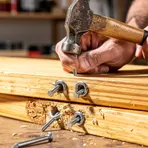 1
4.8
1
4.8
To bend the end of a nail to hold things together

Surround something completely so it cannot get out or move
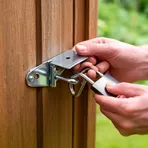
To fasten a door or box with a hinged metal plate and lock it
Antonyms


How Enclosed

Surface Forms
Morphology
The meaning 'to make something definite or secured' is directly built from 'lock' (to secure or fasten) plus the particle 'in' (indicating containment or fixation), so the overall sense of preventing change is compositional and predictable. This verb+particle pattern is common in English and in many other languages, so a B1 learner who knows the constituents would very likely infer the MWE meaning.
Etymology
The phrasal verb lock in comes from the image of closing and locking something so what is inside cannot get out, like shutting a window to lock warmth in a room. That's why it means 'to enclose or keep something from escaping'.