

to lock up
 300
4.0
300
4.0

- phrasal verb
- /lɑk ʌp/
- The suspect was locked up in a secure cell to prevent any escape attempts.
- lock people up
- locked up in prison
- locked up girls
Loading YouTube…
Watch on YouTubeWho did George Bush lock up for what he said?
- Who did George Bush lock up for what he said?
- You can't lock people up for saying words.
- And, you know, I learned from being locked up that I was able to run a prison.
- Yeah, and certainly not someone that should be locked up and have the key thrown away.
- Aside from the trauma of being, you know, locked up and seeing people die and all this stuff?
- Clinton should undoubtedly be locked up without due process.
- So we go in the cell and my dad says, OK, lock him up.
- I would have been fine, but I'd spent seven years locked up.
- They have a guns, they have a presence and they can lock you up and take you away.
- And for some people, they just want to go ahead and lock people up.
- So they locked him up, not like me.
- Maybe they just like it when people are locked up, even when it's unnecessarily.
Examples
-
An incredible 80.7 percent of locked-up girls report having run away from home.
Academic text (2004) -
People are indeed locked up for expressing opposition and are sometimes handled roughly.
Academic text (1996) -
This is the time you are all locked up in your homes, in your rooms.
-
However, after paying the money, he was locked up and placed in jail for six months.
Academic text (1992) -
"I'm sorry my husband had to lock you up, but he thought you might be dangerous."
Fiction book (1995) -
We locked him up and threw away the key.
-
And then the second thing that's so important, lock up your guns.
-
I went back into the house, locked up, and climbed the stairs to bed.
Fiction book (1992) -
Maybe then they'd lock him up and you could get on with a more normal life.
Fiction book (1995) -
All chemicals should be labeled and locked up except when being used under supervision.
Academic text (2002)
Synonyms
 ∞
1.0
∞
1.0
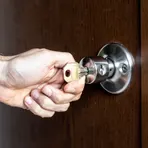
To fasten something with a key so other people cannot open it
 919
2.6
919
2.6
To catch and hold someone or something so they cannot leave
 178
4.2
178
4.2
Put someone in prison as a punishment or keep them locked up
 169
5.9
169
5.9
To keep someone with the police for questioning
 115
5.8
115
5.8
To lock someone in prison or a secure place
 108
2.1
108
2.1
To put someone in prison as punishment
 70
3.9
70
3.9
To keep something inside so it cannot escape by closing or locking
 50
5.5
50
5.5
Lock someone inside a place so they cannot leave
 35
6.2
35
6.2
To restrain someone with chains or limit their freedom
 32
3.4
32
3.4
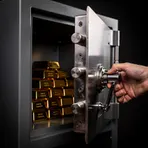
Put someone or something somewhere they cannot leave and others cannot reach
 11
3.4
11
3.4
To fasten something using a small metal lock with a U-shaped bar
 3
5.5
3
5.5
Keep people and things in a place where they cannot leave or be seen
 2
5.4
2
5.4
To put someone or something into a small space with bars to stop them moving freely
 1
9.9
1
9.9
To lock someone inside a room or building against their will


 1
6.4
1
6.4
To keep a person or animal inside a small space like a cage

Surround something completely so it cannot get out or move
Antonyms

 218
2.7
218
2.7
To let a person or animal go after keeping them in a place where they could not leave
How Confined

Surface Forms
Morphology
lock + up
The meaning is directly built from 'lock' (to fasten or secure) plus the particle 'up', which here signals completion/intensification and confinement; a B1 learner who knows both words would readily infer that it means to secure or confine so someone/something cannot leave. This is a regular, compositional phrasal-verb pattern in English and is therefore transparent.
Etymology
Lock up comes from the clear picture of closing a gate or door and locking a person or animal inside so they cannot get out, with up showing they are fully held in. That's why it means 'to put someone in a place' they cannot leave, often to keep them safe or to stop them leaving.