
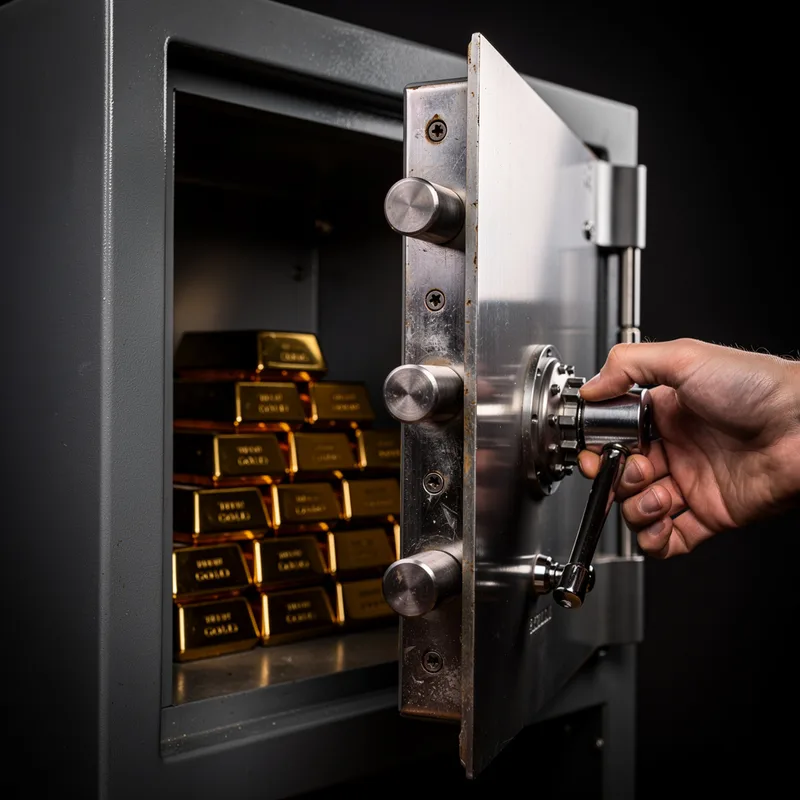
to lock away
 32
3.4
32
3.4

- phrasal verb
- /lɑk əˈweɪ/
- "I wonder what else Mom has locked away that might be interesting."
- keeps locked away
- safely locked away
- locked away for years
Loading YouTube…
Watch on YouTubeI was keeping myself really, really locked away.
- I was keeping myself really, really locked away.
- So all the weapons, the kit, ammunition was stored locked away.
- And there is one loser who gets crowned as being the human sacrifice in order to like, keep the evil gods locked away.
- The most difficult calls we would get, especially during anybody's holiday season, would be people who are on conservatorship were locked away somewhere.
Examples
-
Kept well out of sight, locked away, available in emergencies to certain personnel who are sworn to secrecy.
Fiction book (2001) -
These things had been deliberately locked away down here and kept away from from consciousness.
-
Otherwise, the money will be locked away, again, but without a key.
-
Her own jumpsuit was locked away in another part of the lab.
Fiction book (2001) -
It ain't healthy keeping those feelings locked away inside.
-
The files of the House Select Committee on Assassinations are locked away until the year 2029.
Fiction book (1991) -
The valuable artifacts were locked away in a secure vault to prevent theft.
-
After the incident, the dangerous animals were locked away in their cages until further notice.
-
To ensure the kids' safety, the candy was locked away out of their reach.
Synonyms
 ∞
1.0
∞
1.0
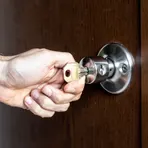
To fasten something with a key so other people cannot open it
 300
4.0
300
4.0
Put someone or something in a place where they cannot leave, for example a jail
 115
5.8
115
5.8
To lock someone in prison or a secure place
 70
3.9
70
3.9
To keep something inside so it cannot escape by closing or locking
 50
5.5
50
5.5
Lock someone inside a place so they cannot leave
 11
3.4
11
3.4
To fasten something using a small metal lock with a U-shaped bar
 3
5.5
3
5.5
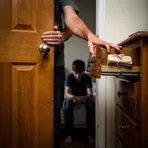
Keep people and things in a place where they cannot leave or be seen
 2
5.4
2
5.4
To put someone or something into a small space with bars to stop them moving freely

Surround something completely so it cannot get out or move
Antonyms


How Confined
- Formal
178
4.2
 32
3.4
215
4.2
32
3.4
215
4.2
- Formal
169
5.9
361
3.1
Surface Forms
Morphology
The meaning 'to put someone or something in a place where they cannot leave or be accessed' is directly derivable from 'lock' (to secure) combined with 'away' (to another place or out of reach). This motion+securing composition is a regular phrasal-verb pattern in English and is cross-linguistically common, so a B1 learner who knows both words will likely infer the MWE meaning.
Etymology
The verb lock away comes from a clear picture: you put something behind a closed door or in a locked box, using a lock and moving it away so no one can reach it. So it means 'to put someone or something where they cannot get out or be reached', and we also use it for hiding feelings or valuables.