

to come unstuck


 1
5.8
1
5.8
- phrasal verb
- It came unstuck, and he sat flat in the muck, buried to his waist.
Examples
-
You think the rest of us aren't on the verge of coming unstuck?
-
"What does a person have to do around here to get fresh air?" she says out loud as she bangs the edges to make it come unstuck.
Fiction book (1998) -
This is where Karateka comes unstuck.
Blog text (17) -
Mr. Firkin knuckles the rocky bone behind his ear, but the blasted thing won't come unstuck.
Fiction book (1990) -
However, all of this can easily unravel and come unstuck with the Internet getting into self-destruction mode if we don't do our utmost best to secure full network security.
Blog text (1) -
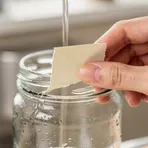
The label on the jar came unstuck and fell onto the table.
-
After several years, the old wallpaper began to come unstuck from the walls.
-
The toy's parts can come unstuck if they are pulled apart too hard.
Synonyms
 131
3.5
131
3.5
To become loose and fall off
 117
2.3
117
2.3
Separate from something by breaking or dropping
 82
5.3
82
5.3
To stop being part of or connected to something
 44
3.1
44
3.1
To break into pieces or fall into separate parts
 28
2.8
28
2.8
To make a piece come away from something by hitting or bending it
 23
3.8
23
3.8
Begin suddenly in a violent or noisy way
 16
4.0
16
4.0
To come apart from something it is connected to
 9
5.3
9
5.3
To begin to fail, fall apart, or lose control
 2
3.0
2
3.0
To become loose and separate from something
 2
3.5
2
3.5
To come off a larger thing, often because of force or damage
 1
3.9
1
3.9
To come away from something it was stuck to
 1
6.1
1
6.1
To separate something from what it is connected to
Antonyms
How Detached

Surface Forms
Morphology
The meaning is directly compositional: 'come' here indicates a change of state (become) and 'unstuck' means freed from attachment, so 'come unstuck' straightforwardly means 'become detached.' The pattern 'come + adjective' is a common, cross-linguistic way to mark a change of state, so a B1 learner who knows both constituents will likely understand this MWE.
Etymology
Come unstuck comes from a simple picture, come + unstuck, of something stuck with glue or tape slowly pulling away and hanging loose. So, when a bandage or poster comes unstuck, it comes away from the surface and the phrase means 'to become detached'.