
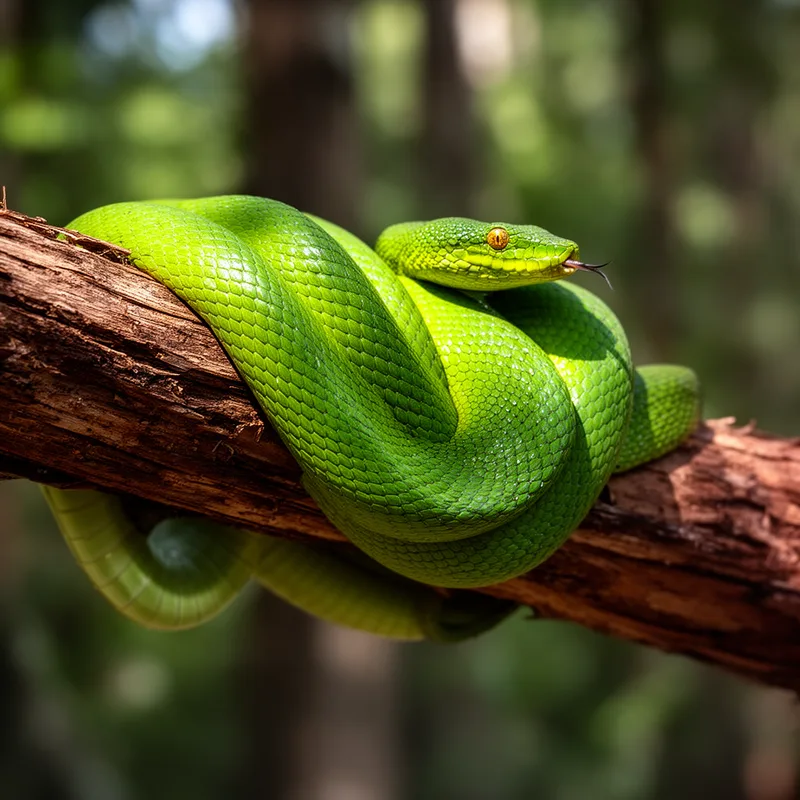
snake
 427
1.0
427
1.0

- noun
- /sneɪk/
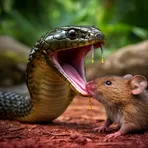
- The snake slithered quietly through the grass, searching for its next meal.
- snake bite
- kill a snake
- coiled snake
Loading YouTube…
Watch on YouTubeNumber one, can I turn a snake into snake leather?
- Number one, can I turn a snake into snake leather?
- A basilisk is a snake and a penis isn't a snake.
- Well, my, my son, he really wanted a snake for Christmas.
- And it's almost like, you know how like snakes shed their skin.
- And then at the last minute he captures the snake licking her ear.
Examples
-
A slight increase in rat bites was reported, but no snake bites were recorded.
Academic text (1993) -
Well, my, my son, he really wanted a snake for Christmas.
-
Would you rather eat a snake or a rat?
-
Link is wondering if the snake can smell his breath.
-
I pulled up a three foot snake, a snake on my fly fishing rod.
-
We have a little snake just chilling here.
-
Snakes lay eggs and snakes eat eggs.
-
And she sees it, too: a snake, a little black snake all coiled up.
Academic text (1991) -
Mommy: Once upon a time, there were two little snakes named Nathan and Ben.
Academic text (1999) -
Those snakes were actually poisonous, weren't they?
Synonyms
 72
6.5
72
6.5
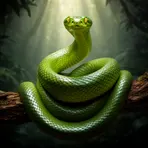
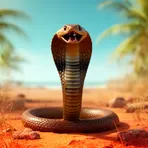
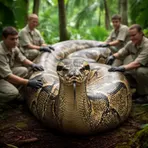
A large snake with scales that often appears in myths and stories
 52
2.3
52
2.3
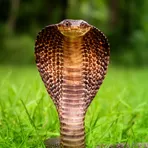
A large venomous snake that spreads the skin on its neck into a hood when threatened
 42
4.1
42
4.1
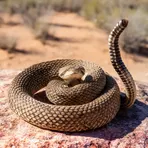
A dangerous snake from America with a rattle on its tail that warns others
 41
7.2
41
7.2
A venomous snake with long hollow fangs that inject venom
 16
5.6
16
5.6
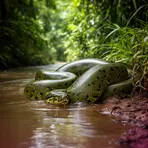
A very large snake that lives in rivers and swamps in tropical South America
 11
6.5
11
6.5
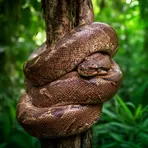
A large snake without venom that kills animals by wrapping and squeezing them
 3
3.9
3
3.9
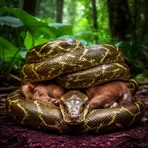
A large snake from Africa and Asia that is not poisonous and kills prey by squeezing
 2
6.4
2
6.4
A long sea animal with no legs, a flat tail, and a poisonous bite that eats fish
 2
7.2
2
7.2
A small venomous snake with red, yellow, and black bands that has a deadly bite
 2
3.5
2
3.5
A snake that usually is not dangerous and lives near water
 1
9.9
1
9.9
A long reptile without legs, commonly known as a snake
 1
5.3
1
5.3
A snake that is not poisonous and eats rats and mice

 1
9.7
1
9.7
A venomous snake like a cobra or coral snake that lives in warm regions
 1
8.5
1
8.5
A snake like a cobra or mamba that has venom and uses fixed fangs to put it into other animals
 1
8.0
1
8.0
A very large snake from Southeast Asia with skin like a net that is not venomous
 1
7.0
1
7.0
A large North American snake that is not venomous and lives in burrows eating rodents
 1
5.8
1
5.8
A North American snake that does not have venom and often eats other snakes and small animals
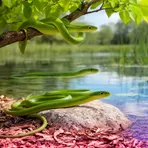
A type of snake that is usually not venomous and lives on land, in trees or in water

A mostly non-venomous snake that lives on land, in trees, or near water
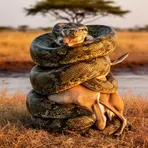
A very large African snake that kills prey by squeezing it

A venomous snake with brown and yellow bands found in Australia and Tasmania
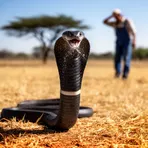
A venomous snake from southern Africa that can spit venom to defend itself

A small venomous Australian snake with bright red, black and white rings that is usually harmless to people
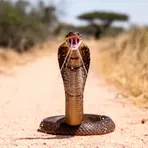
A venomous southern African snake that sprays venom at a threat, often to hit the eyes
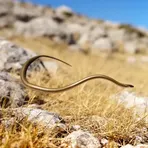
A small fast snake with a long thin body and tail
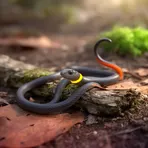
A small snake that is not poisonous with a yellow or orange ring around its neck

A harmless snake with a bright ring around its neck found in North America or Europe

A small ground snake with a black head that hides under rocks or leaves

A pale blotched desert snake with a short blunt nose from southwestern North America that is not dangerous to people
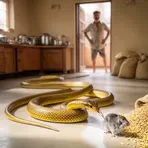
A large snake from South and Southeast Asia that is not poisonous and often enters buildings to catch mice

A large harmless North American snake that eats birds and eggs

A snake that is not poisonous, often tan or brown, that lives near houses and eats mice
Idioms

- Offensive
5
8.1
A person who pretends to be friendly but secretly harms or tricks you



Compounds

- Offensive
7
8.0
A person who tricks people by offering fake medicines or useless products


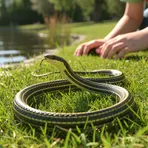
- US
4
3.8
A common North and Central American snake that is not venomous and has long stripes
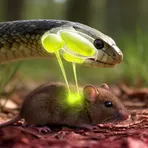 3
4.3
3
4.3
A poisonous fluid that some snakes inject when they bite to stop or kill other animals

- Specialized
2
6.4
A long sea animal with no legs, a flat tail, and a poisonous bite that eats fish

 1
3.0
1
3.0
A large river in the northwest United States that flows from Wyoming to the Columbia River
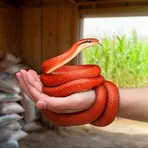
- US
1
6.0
A gentle reddish-orange snake from the southeastern United States often found on farms and kept as a pet

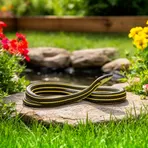 1
3.5
1
3.5
A harmless North American snake that has stripes and often lives in gardens
- Specialized
1
8.5
A snake like a cobra or mamba that has venom and uses fixed fangs to put it into other animals
- US
1
5.8
A North American snake that does not have venom and often eats other snakes and small animals
- US
1
7.0
A large North American snake that is not venomous and lives in burrows eating rodents


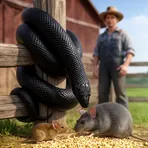
A large shiny black snake from North America that is not venomous and eats rats and mice

- US
A large North American snake that eats rodents, lives in burrows, and is not venomous

- Australian
A large Australian snake with patterned skin that often lives near farms
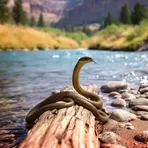
A snake that is not venomous and lives near fresh water in the western United States
- Specialized
A mostly non-venomous snake that lives on land, in trees, or near water

- US
A long thin water animal like an eel with tiny legs that lives in muddy pools in the southern US


- Specialized
A venomous banded snake from the southeastern United States and parts of Central America

A small reddish-grey snake in eastern North America that burrows under leaves and soil

A large nonvenomous snake with shiny blue-black skin that lives in the southeastern United States

- South African
A small snake that lives in trees in southern Africa with black and orange bands
- Indian
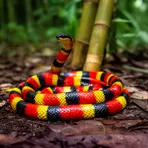
A venomous snake with bright red, yellow, and black bands that lives in Asia

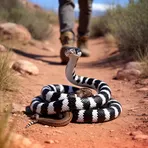
A small snake with dark and light rings that moves through sand in the southwestern United States
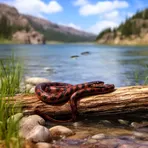
A harmless snake with dark bands that lives near rivers and lakes in the western United States
- Australian
A small venomous Australian snake with bright red, black and white rings that is usually harmless to people
A pale blotched desert snake with a short blunt nose from southwestern North America that is not dangerous to people
- Specialized
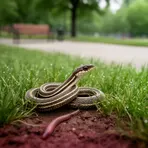
A small shy snake with stripes that lives in grass and parks in the central United States

- US
A mildly venomous snake with a V-shaped mark on its head that lives in rocky areas

- US
A harmless North American snake with red, black, and white bands that looks like a coral snake
- Specialized
A legless lizard with a long tail that breaks off and regrows to escape predators

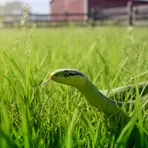

- US
A small shy snake with bright rings that hides under rocks in dry western North America
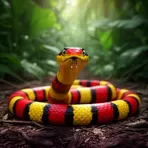
A brightly colored snake with poison in its bite that lives in Central and South America
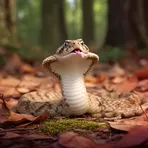
A harmless North American snake with an upturned nose that spreads its head and plays dead when scared

- Archaic
A snake from old stories that holds its tail in its mouth and rolls like a hoop
- South African
A snake that is not poisonous, often tan or brown, that lives near houses and eats mice
- Indian
A large snake from South and Southeast Asia that is not poisonous and often enters buildings to catch mice

- US
A large dark blue nonvenomous snake in southern North America and Mexico that often enters burrows
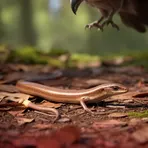


A brightly colored venomous snake from the Americas with red, black and yellow or white bands
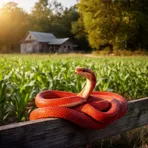
A large harmless reddish snake from the southern United States that lives on farms and in woods
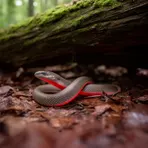

- UK
A harmless snake with a bright ring around its neck found in North America or Europe
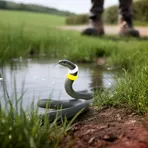
A small snake that is not poisonous with a yellow or orange ring around its neck
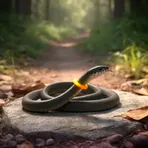
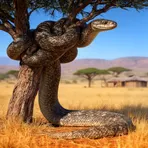
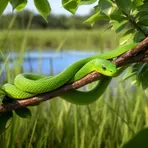
- Specialized
A thin bright green snake with rough scales that is harmless and lives in the southern and eastern United States

- Australian
A venomous snake from Asia, Africa, or Australia with bright bands

- US
A large snake that does not have venom and lives in pine woods in the eastern United States

- Australian
A venomous snake with brown and yellow bands found in Australia and Tasmania

A small reddish snake that looks like a worm and lives in eastern United States woodlands

A harmless pale snake with smooth, rubbery skin that lives in grass and woods
How Dangerous
- South African
1
8.9
 52
2.3
52
2.3
- US
42
4.1
427
1.0
- US
4
3.8
Surface Forms
Etymology
Snake comes from an old English word snaca, which likely meant 'to crawl' or 'to creep'. So the name pictures the long, limbless reptile that moves by crawling.