

rattlesnake
 42
4.1
42
4.1

- noun
- /ˈrætəlˌsneɪk/
- US
- While hiking in the desert, I heard the distinctive rattle of a rattlesnake warning me to stay away.
- rattlesnake (Crotalus)
Loading YouTube…
Watch on YouTubeBut I think in this culture, the rattlesnake almost never leaves the path.
- But I think in this culture, the rattlesnake almost never leaves the path.
- There's there's literally rattlesnakes, there's scorpions, there's coyotes.
- The, the it's a rattlesnake dance.
- We've got to be really careful for the rattlesnakes.
- And in the night, that night, Peter went off into the hills where there was the rattlesnakes and the cactus.
- Now when and in Florida we had the biggest rattlesnake, the eastern diamondback, it's dangerous rattlesnake is found here.
- your mind is likely to spot the rattlesnake over there because it's dangerous versus the leaf that's turning orange, which is beautiful
- Animals like rattlesnakes and coyotes only emerge after after dark or at dawn and dusk, so they're crepuscular.
- And it's just, you know, it's like a rattlesnake shaker.
- It gives you a, you know, could be, you know, rattlesnake, Viper heat sensing organs we were talking about earlier.
- So I'm thinking every now and then they would ask her to spell this or spell that spell rattlesnake, you know, spell Schiffer robe, spell panty.
- Do you haul a rattlesnake into court for biting an animal and killing it?
Examples
-
Animals like rattlesnakes and coyotes only emerge after after dark or at dawn and dusk, so they're crepuscular.
-
"And then there was that time he fought off a rattlesnake in the backyard..."
Fiction book (1999) -
I almost got bit by a big rattlesnake today.
-
So, I shot a rattlesnake.
-
Chief -- this rattlesnake took a chunk out of us a ways back.
Fiction book (1994) -
Sometimes it was a field worker who had been bitten by a rattlesnake.
Fiction book (1995) -
I'm sure this desert is full of rattlesnakes.
-
There's nothing but rocks and rattlesnakes.
-
The dusty trails were dangerous, infested with rattlesnakes and bandits.
Fiction book (2000) -
I was thrilled to see the entwined rattlesnakes on the back of his jacket disappearing into the gloom.
Fiction book (1997)
Synonyms
 427
1.0
427
1.0
A long animal without legs covered in scales that sometimes has poison
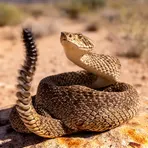 14
8.2
14
8.2
A snake that can bite with poison and has a tail that makes a rattling sound when shaken
Compounds
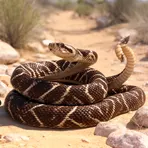 1
7.2
1
7.2
A large venomous snake that has a rattle and diamond-shaped marks on its back
 1
8.1
1
8.1
A large poisonous snake with a rattling tail that lives in eastern United States forests

A large venomous snake with a rattle that lives in wooded areas of the southeastern United States
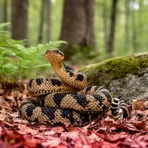
A venomous rattlesnake with dark bands that lives in eastern United States woods

A very venomous rattlesnake with a rattle found in deserts of the southwestern United States and northern Mexico
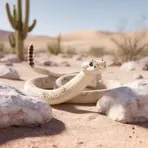
A small pale desert snake with a rattle and horn-like scales above its eyes in the southwestern United States

An orchid with many small white or brown flowers on a spiral spike like a rattlesnake tail




A North American wild plant with long clusters of small flowers once used as medicine


A tall, prickly plant with round flowers that people once used to treat snakebites
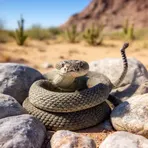
A venomous snake that lives among rocks in the southwestern United States and Mexico
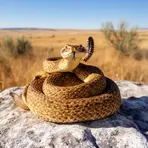
A venomous snake with a rattle that lives in dry grasslands in central North America

A venomous snake with dark cross bands that lives in dry rocky canyons of southern Arizona and Mexico

A dangerous snake with a rattle and speckled skin that hides on desert rocks
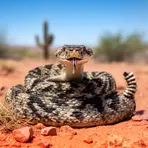
A large snake that has venom, a rattle, and diamond markings that lives in the US Southwest and Mexico
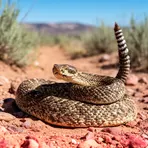
A venomous snake with a rattle on its tail that lives in western North America
How Venomous
- South African
3
8.7

- US
42
4.1
- Specialized
3
8.0
- US
5
8.5
- US
4
3.8
Surface Forms
Morphology
Etymology
Rattlesnake comes from the two simple words rattle, meaning 'a shaking noise' like a baby's toy, and snake ('snake'). The snake has special tail parts that make a real rattle sound as a warning, so the name tells you exactly what the animal does.