

canebrake rattlesnake
- noun
- /ˈkeɪnˌbreɪk ˈrætəlˌseɪk/
- US
- Many people fear the canebrake rattlesnake due to its venom.
Examples
-
It's important to watch your step when hiking in areas known to be home to the canebrake rattlesnake.
-
Researchers are studying the habitat preferences of the canebrake rattlesnake in Georgia forests.
-
The canebrake rattlesnake is commonly found in wooded river bottoms in the southeastern United States.
-
The canebrake rattlesnake is known for its distinctive pattern.
-
The canebrake rattlesnake is known for its distinctive markings and is often found in wooded areas in the southeastern United States.
-
Hiking through the brush, I spotted a canebrake rattlesnake coiled in the sun, its camouflage blending perfectly with the surroundings.
-
Residents were warned to keep a safe distance if they encountered a canebrake rattlesnake in their backyard, as it is venomous.
Synonyms
 42
4.1
42
4.1

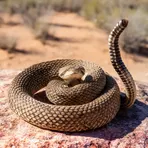
A dangerous snake from America with a rattle on its tail that warns others
 14
8.2
14
8.2
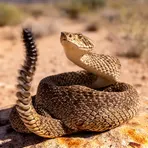
A snake that can bite with poison and has a tail that makes a rattling sound when shaken
 1
8.1
1
8.1
A large poisonous snake with a rattling tail that lives in eastern United States forests

A large venomous rattlesnake like a timber rattlesnake that lives in southeastern United States forests and cane fields
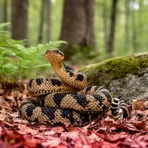
A venomous rattlesnake with dark bands that lives in eastern United States woods
Surface Forms
Morphology
The meaning is directly derivable from combining 'canebrake' (a thick growth of cane) with 'rattlesnake' (a snake with a rattling tail): it denotes a rattlesnake associated with canebrakes/habitat. This is a straightforward noun–noun compound following common compositional patterns, so a learner who knows both constituents can infer the meaning.
Etymology
Canebrake rattlesnake gets its name from where the snake lives: a canebrake is a thick patch of tall wild cane, and a rattlesnake is a snake with a noisy rattle on its tail. The picture of a rattling snake hiding in the cane explains why the name means a large venomous snake that lives in cane thickets in the southeastern United States.