

canebrake rattler
- noun
- /ˈkeɪnˌbreɪk ˈrætlər/
- US
- Farmers in the southern U.S. sometimes encounter canebrake rattlers in old cane fields.
Examples
-
Many hikers are cautious of the canebrake rattler in the woods.
-
The bite of a canebrake rattler can be very dangerous and requires immediate medical attention.
-
While hiking in Georgia, we spotted a canebrake rattler sunning itself near the trail.
-
The canebrake rattler is known for its distinctive pattern.
-
The canebrake rattler is often found basking on warm rocks during sunny days.
-
If you see a canebrake rattler in the wild, it's best to keep your distance and admire its beauty from afar.
-
In the southeastern United States, the canebrake rattler is one of the most recognizable snakes due to its distinctive markings.
Synonyms
 42
4.1
42
4.1

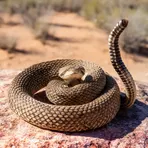
A dangerous snake from America with a rattle on its tail that warns others
 14
8.2
14
8.2
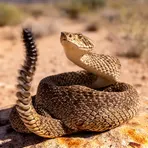
A snake that can bite with poison and has a tail that makes a rattling sound when shaken
 1
8.1
1
8.1
A large poisonous snake with a rattling tail that lives in eastern United States forests

A large venomous snake with a rattle that lives in wooded areas of the southeastern United States

A venomous rattlesnake with dark bands that lives in eastern United States woods
Surface Forms
Morphology
This is a straightforward noun+noun compound: 'canebrake' (a thick growth of cane) + 'rattler' (a rattlesnake) yields a rattlesnake associated with canebrakes. The meaning — a rattlesnake from or living in cane thickets — is directly derivable from the constituents and follows a common 'type-of' naming pattern, so a learner who knows both words would understand it.
Etymology
Canebrake rattler comes from the snake's home and sound: a canebrake is a 'thick patch of wild cane', and a rattler is a 'snake with a rattle' on its tail. So the name makes you picture a rattlesnake living in cane fields, which is why it refers to the large southern snake also called the 'timber rattlesnake'.