
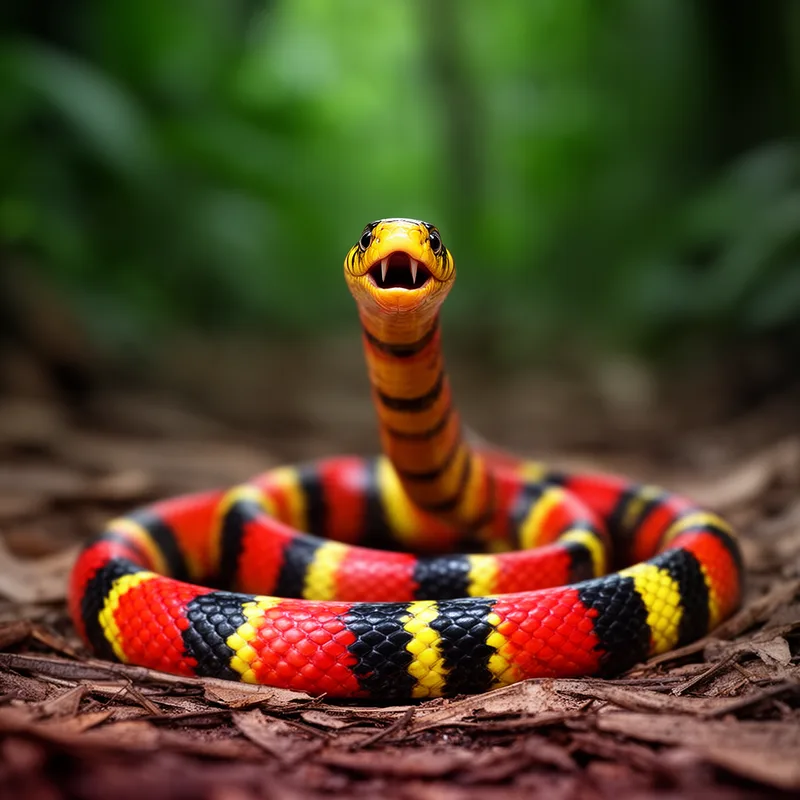
coral snake
 2
7.2
2
7.2

- noun
- /ˈkɔrəl sneɪk/
 :
serpiente de coral
:
serpiente de coral
- Mimic of the eastern coral snake (Micrurus fulvius) - later in this blog.
- coral snake bite
- yellow coral snake
- coral snake's bright bands
We have the cottonmouth and we have the coral snake and we have the pygmy rattlesnake, the smallest, the biggest.
- We have the cottonmouth and we have the coral snake and we have the pygmy rattlesnake, the smallest, the biggest.
Examples
-
Why, a coral snake, its ring's prettier than a rainbow... but it's got a real mean way of pain in it, is the fact.
-
Why should a coral snake need two glands of neurotoxic poison to survive while a king snake, so similarly marked, needs none?
Fiction book (1994) -
And he picks it up and it comes out of the table like a coral snake, spurts all over.
-
With a coral snake bite, you can put a restrictive band, like an Ace bandage, over the skin to cut off the venom from spreading.
Blog text (25) -
Red on yellow, kills a fellow (coral snake, venomous) from S. New Jersey to S. Florida, west to E. Oklahoma and extreme E. Texas; S. Texas.
Blog text (12) -
Sea snakes are thought to have evolved from terrestrial elapids, which today include cobras, land kraits, coral snakes, and numerous other venomous species in Australia.
Academic text (2009) -
The brightly colored coral snake can be identified by its distinctive red, yellow, and black bands.
-
While hiking in the forest, we spotted a coral snake slithering across the path.
-
In many regions, the coral snake is recognized as one of the most venomous snakes due to its vibrant colors.
Synonyms

A group of venomous coral snakes with red, yellow, and black bands found in the Americas

A venomous coral snake with red, yellow, and black rings found in the southeastern United States

A venomous banded snake from the southeastern United States and parts of Central America

A snake with venom and red, yellow, black bands that lives in southwest US and Central America

A brightly colored venomous snake from the Americas with red, black and yellow or white bands

A small venomous coral snake from Central America to southwestern United States with bright red, black, and yellow bands
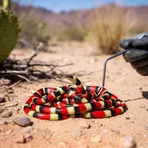
A group of small venomous coral snakes that live in North America with bright ringed colors
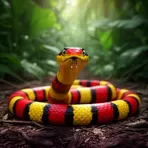
A brightly colored snake with poison in its bite that lives in Central and South America
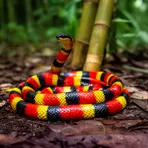
A venomous snake with bright red, yellow, and black bands that lives in Asia
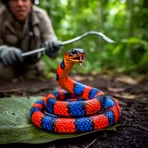
A small very poisonous Asian snake with bright colors

A group of small brightly colored venomous snakes from Asia

A venomous snake from Asia, Africa, or Australia with bright bands

A small venomous Australian snake with bright red, black and white rings that is usually harmless to people

A small Australian snake with venom that can hurt people

A small venomous Australian snake with black and white bands on a red body that is not dangerous to people

A venomous African snake with bright red and black bands that lives in dry savanna

A small snake from southern Africa that lives in trees and has black and orange bands

A small snake that lives in trees in southern Africa with black and orange bands
Surface Forms
Morphology
coral + snake
The noun phrase is compositional: 'coral' modifies 'snake' to indicate a snake characterized by coral (reddish) color or appearance, so a learner who knows 'coral' (as the color/organism) and 'snake' can infer it denotes a type of snake. While specific details like venomousness and banding are encyclopedic and not fully derivable from the parts, the core meaning 'a snake with coral-like color/appearance' is predictable from the constituents.
Etymology
Coral snake was named because its bright red bands look like pieces of coral set against black and yellow. That very noticeable pattern acts as a warning of the snake's 'venomous' nature, so the name helps people remember it is dangerous.