

grass snake
- noun
- US
- The grass snake is harmless to humans and feeds mainly on insects and small amphibians.
Examples
-
We spotted a grass snake slithering quietly through the tall weeds behind the barn.
-
The grass snake slithered through the tall grass.
-
Children at the nature camp learned how to identify a grass snake by its bright green color.
-
I spotted a grass snake in the garden.
-
Children at the nature camp learned how to identify a grass snake by its bright green color.
-
The grass snake is harmless to humans and feeds mainly on insects and small amphibians.
-
We spotted a grass snake slithering quietly through the tall weeds behind the barn.
Synonyms
 4
3.8
4
3.8

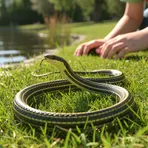
A common North and Central American snake that is not venomous and has long stripes
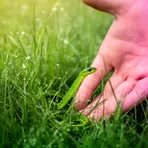
A small thin green snake that is harmless to people and lives in grassy areas

A thin snake with smooth green scales, not poisonous, living in meadows and open woods in the United States

A small green North American snake that eats insects

A thin bright green snake with rough scales that is harmless and lives in the southern and eastern United States

A thin North American snake with a yellow stripe often near water
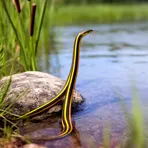
A thin North American snake with yellow or red stripes that is not poisonous and often lives near water
Surface Forms
Morphology
The compound 'grass snake' denotes a snake associated with grass (i.e., a snake that is green/striped or found in grassy areas), a meaning directly derivable from combining 'grass' + 'snake'. This noun–noun composition is a transparent and cross-linguistically common pattern, so a B1 learner who knows both constituents would readily infer the MWE meaning.
Etymology
Grass snake is named for the simple picture of a snake living in long grass. In North and Central America these small snakes are often bright green or striped, so the name now means a small, 'harmless' snake you find in fields and weeds.