

glass snake
- noun
- /ɡlæs sneɪk/
- Specialized
- The glass snake can shed its tail to escape predators, a feature unique among many reptiles.
Examples
-
Unlike true snakes, the glass snake has movable eyelids and ear openings.
-
Many people mistake a glass snake for a regular snake, but scientists identify it as a lizard.
-
A glass snake can often be mistaken for a snake.
-
Have you ever seen a glass snake in the wild?
-
Many people mistake a glass snake for a regular snake because it has a similar body shape but is actually a lizard.
-
The glass snake can shed its long, fragile tail to escape from predators, allowing it to survive in the wild.
-
Unlike true snakes, the glass snake is unique because it has visible eyelids and openings for ears.
Synonyms

 103
1.0
103
1.0

A small animal with scaly skin, four legs, and a long tail


 1
9.2
1
9.2
A legless lizard that looks like a snake, has eyelids and ear openings, and can grow its tail again

A lizard without legs that looks like a snake but has eyelids and ear openings
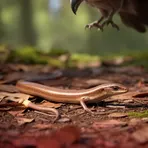
A legless lizard like a snake that sheds and regrows its tail
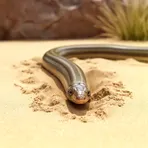
An animal like a lizard but without legs that looks like a snake
Surface Forms
Morphology
The phrase 'glass snake' transparently signals an animal related to or resembling a snake (combining 'glass' + 'snake' suggests a snake-like creature), so a B1 learner would likely infer something snake-like from the constituents. However, the specific zoological sense — that it is actually a legless lizard with vestigial hind limbs that can shed and regenerate its fragile tail — is not derivable from the words alone, so the meaning is only partially predictable.
Etymology
Glass snake gets its name from the animal's fragile tail that can break off like glass when a bird or other animal grabs it. People call it a snake because it looks long and has no legs, but it is actually a 'legless lizard' that can 'shed its tail' to escape, so the name links that clear image to the animal's meaning today.