
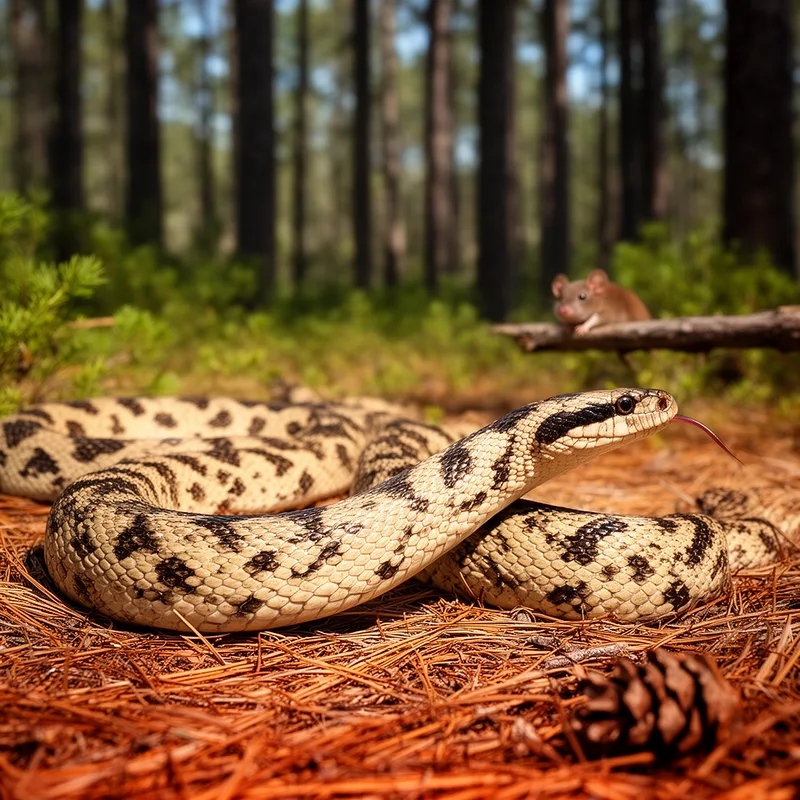
pine snake
- noun
- /paɪn sneɪk/
- US
- Many wildlife enthusiasts seek out the pine snake due to its distinctive markings and large size.
Examples
-
The pine snake is often spotted in the sandy soils of the pine forests in Virginia.
-
The ranger explained that the pine snake primarily feeds on small mammals and is nonvenomous.
-
Some of the state and federally listed rare species found there are the gopher tortoise, pine snake, and Cooley's meadow rue.
Academic text (2008)
Synonyms

 427
1.0
427
1.0

A long animal without legs covered in scales that sometimes has poison
A group of large snakes from North America that are not poisonous, like gopher and bull snakes
Surface Forms
Morphology
This is a straightforward noun–noun compound: 'pine' (pine trees/forests) + 'snake' (a reptile) yields a snake associated with pines or pine forests. The referential, descriptive meaning follows regular English compounding patterns (and similar patterns in other languages), so a B1 learner who knows both words can readily infer the intended meaning.
Etymology
The noun pine snake is named for the place it lives: long, not poisonous snakes often found in pine woods of the eastern United States. So the name means 'a snake that lives in pine forests'.