
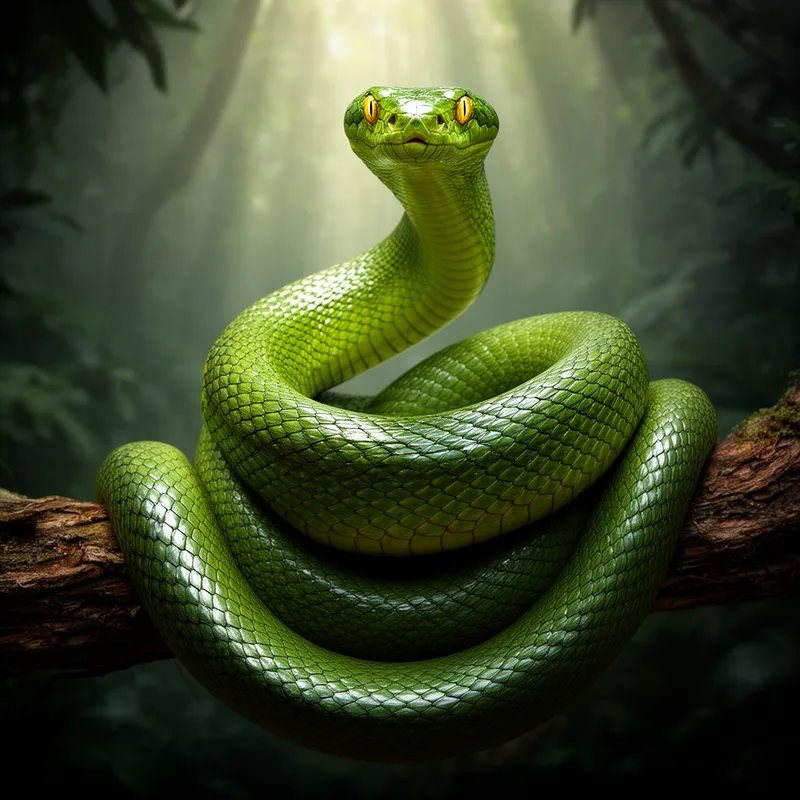
serpent
 72
6.5
72
6.5

- noun
- /ˈsɜːrpənt/
- The artist painted a large serpent coiled around a mystical tree, symbolizing temptation.
- serpent in the garden
- brazen serpent
- serpent's head
Loading YouTube…
Watch on YouTubeTo even clasp the serpent to her breast.
- To even clasp the serpent to her breast.
- But it's not fully fleshed out the picture because serpents are camouflaged, right?
- But Eve said, Lord, let me tell you about that serpent.
- I have dogs for legs and head is a serpent.
- I've been in this prayer corner, OK, stomping on the serpent's head.
- Anki, the Sumerian God, he is always been known as the, the wise serpent.
- There's many myths the, the, the, the Quetzalcoatl, the, the feathered serpent in, in the new World stories.
- Be wise as a serpent and soft as a dove or be as gentle as a dove?
- Even though there are miracle stories, Moses still splits the Red Sea, his staff still turns into a serpent.
- She's the one who raises that Serpent King.
Examples
-
Dying on the cross, crushed the head of the ancient serpent.
-
If you invite a serpent into your home, perhaps you shouldn't be surprised if it bites you.
-
When I came upon the valley of bones, the serpent said, "Make this your home."
Fiction book (1990) -
Can I... can I help you?" She looked out across the Serpent, as if searching for something.
Fiction book (1991) -
One day, while the man is exploring alone, a wily serpent shows up near the apple tree.
Fiction book (1993) -
The lion shall eat straw like the ox, but the serpent, its food shall be dust.
-
To one side, the serpent lay dying, its breathing an uneven rasp in the sudden silence.
Fiction book (1993) -
Marking this spot was a mysterious stone guarded by a legendary serpent called the Pitho.
-
In the ancient story, the serpent tempted the hero with promises of power and wisdom.
-
According to the legend, a giant serpent dwelled in the deep waters of the lake, guarding a hidden treasure.
Synonyms
 427
1.0
427
1.0
A long animal without legs covered in scales that sometimes has poison
 52
2.3
52
2.3
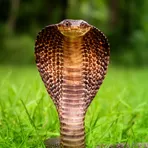
A large venomous snake that spreads the skin on its neck into a hood when threatened
 42
4.1
42
4.1
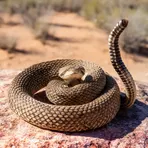
A dangerous snake from America with a rattle on its tail that warns others
 41
7.2
41
7.2
A venomous snake with long hollow fangs that inject venom
 26
3.6
26
3.6
A very large snake that kills animals by wrapping its body around them
 16
5.6
16
5.6
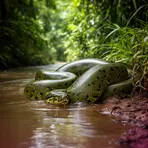
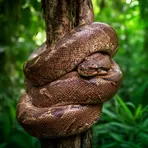
A very large snake that lives in rivers and swamps in tropical South America
 11
6.5
11
6.5
A large snake without venom that kills animals by wrapping and squeezing them
 3
9.5
3
9.5
A large sea creature like a snake from old stories
 2
3.5
2
3.5
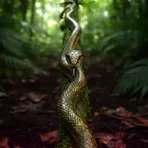
A snake that usually is not dangerous and lives near water
 1
9.9
1
9.9
A long reptile without legs, commonly known as a snake
 1
5.3
1
5.3
A snake that is not poisonous and eats rats and mice
 1
6.0
1
6.0
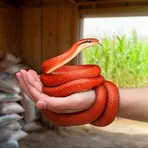
A gentle reddish-orange snake from the southeastern United States often found on farms and kept as a pet


 1
7.0
1
7.0
A large North American snake that is not venomous and lives in burrows eating rodents
 1
5.8
1
5.8
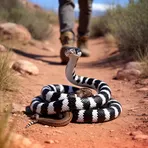
A North American snake that does not have venom and often eats other snakes and small animals
 1
9.7
1
9.7
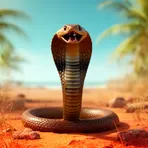
A venomous snake like a cobra or coral snake that lives in warm regions
 1
8.5
1
8.5
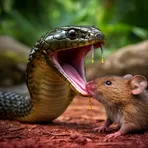
A snake like a cobra or mamba that has venom and uses fixed fangs to put it into other animals
 1
7.5
1
7.5
A large venomous African snake often shown on Pharaohs' crowns
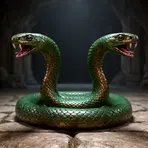
A mythical snake with a head at each end of its body

A large North American snake that eats rodents, lives in burrows, and is not venomous

A large harmless North American snake that eats birds and eggs
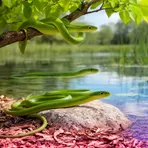
A type of snake that is usually not venomous and lives on land, in trees or in water

A mostly non-venomous snake that lives on land, in trees, or near water

A small venomous Australian snake with bright red, black and white rings that is usually harmless to people
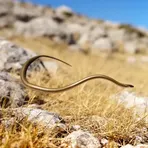
A small fast snake with a long thin body and tail

A small thin snake that looks like a worm and lives under stones or logs

A small snake that looks like a worm and lives underground
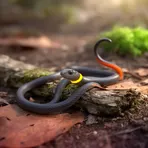
A small snake that is not poisonous with a yellow or orange ring around its neck

A harmless snake with a bright ring around its neck found in North America or Europe
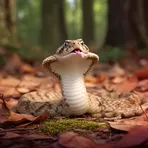
A harmless North American snake with an upturned nose that spreads its head and plays dead when scared

A small ground snake with a black head that hides under rocks or leaves

A harmless pale snake with smooth, rubbery skin that lives in grass and woods
Compounds

- US
A tropical fern with brown scaly roots and large blue-green divided leaves often grown for decoration
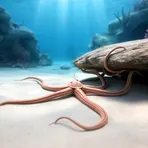
A sea animal like a starfish with long thin arms that move easily from a small central body

Surface Forms
Etymology
Serpent comes from the Latin word serpens, from serpere which means 'to creep'. Think of a long animal that crawls or slides along the ground like a snake, so a serpent is simply a creeping snake.