
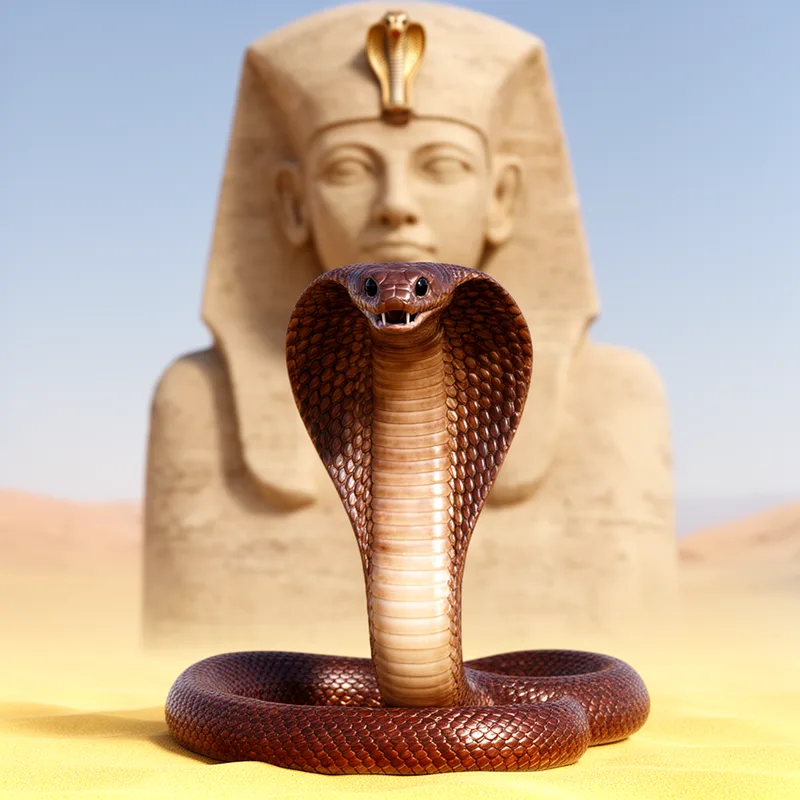
Egyptian cobra


 1
7.5
1
7.5
- noun
- /ɪˈdʒɪpʃən ˈkoʊbrə/
- South African
- The Egyptian cobra is known for its distinctive hood.
Examples
-
Zookeepers exercised caution when caring for the Egyptian cobra due to its potent venom.
-
The Egyptian cobra was often depicted on the foreheads of ancient Pharaohs' crowns.
-
The bite of an Egyptian cobra can be fatal without prompt medical treatment.
-
Many ancient Egyptians revered the Egyptian cobra as a symbol of royalty.
-
The Egyptian cobra is known for its intimidating hood and potent venom.
-
During their reign, Pharaohs often depicted the Egyptian cobra as a symbol of royalty.
-
While hiking in Africa, we spotted a striking Egyptian cobra slithering through the grass.
Synonyms
 52
2.3
52
2.3
A large venomous snake that spreads the skin on its neck into a hood when threatened
 4
8.8
4
8.8
A venomous snake often linked with ancient Egypt and Cleopatra
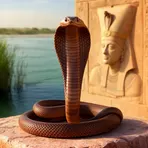
A large venomous cobra from Africa often shown on ancient Egyptian crowns
Surface Forms
Morphology
The phrase combines the adjective 'Egyptian' (from or relating to Egypt) with 'cobra' (a venomous snake), so the meaning 'a cobra from Egypt' is directly and transparently derivable from the constituents. Adjective+noun country-origin constructions are cross-linguistically common, so a B1 learner who knows both words would readily understand this MWE.
Etymology
The noun Egyptian cobra comes from the large hooded snake: Egyptian shows where it lived and cobra names the hooded snake that was put on Pharaohs' crowns as a sign of 'power'. So the name makes people think of 'danger' and royal 'power'.