

language
 612
1.0
612
1.0

- noun
- /ˈlæŋɡwɪdʒ/
- Children are not born speaking a language, but they must communicate to survive.
- language skills
- spoken language
- written language
Loading YouTube…
Watch on YouTubeIt's going to be what Hegel calls the language of base flattery.
- It's going to be what Hegel calls the language of base flattery.
- I would use imaginative language and humor.
- A second thing not to confuse language with is proper grammar.
- And of course, some people say that language is a kind of music.
- Is it just as simple as language, image and action?
- Also, you know, forgive the language, but like, don't just see.
- Some people saying that mass is language which use God.
- No less than the grammatical language and what we have to do.
- Today we are learning the language in which God created life.
- Because with the sword and the subconscious language that we're everything is hard.
- Pronouns themselves are to make the language simpler, easier.
Examples
-
We learn new words and grammar rules to improve our understanding of language.
-
You don't know what a relief it is to run into somebody who speaks my language.
-
We're learning about a language that has no words.
-
So little things like that help, but language can get more complex.
-
Other animals have language and say and sing things.
-
We all speak the same language.
-
Several delegates spoke of the importance of using appropriate language when talking to patients about self-care.
Academic text (2011) -
Studying different cultures can deepen your appreciation for their unique language.
-
Learning a second language can open up many opportunities for travel and work.
Synonyms
 108
4.4
108
4.4
A spoken or written language used by a group of people
 2
3.5
2
3.5
A system people use to speak and write to each other rather than computer code
 1
8.2
1
8.2
A language people use to communicate across different groups
Idioms


Compounds
 52
2.7
52
2.7
The way a person moves their face, hands, and body to show feelings without words
 51
1.0
51
1.0
A language spoken in the UK, the US, and many countries and used worldwide for communication
 32
2.8
32
2.8
A language using hand signs and face movements to communicate, often used by people who are deaf


- Specialized
15
3.9
A set of rules for writing instructions a computer can follow




 3
3.9
3
3.9
A language of hand signs and body movements used by deaf people in the United States and parts of Canada
 3
2.3
3
2.3
Learning to understand, speak, read, and write a language that is not your first



- Specialized
2
3.5
A system people use to speak and write to each other rather than computer code


- Specialized
1
4.6
A set of simple tags that tell a computer how to show or arrange text
- Specialized
1
5.5
A type of computer language that is easy for people to read and write
 1
9.9
1
9.9
A language spoken by the Sámi people in northern Scandinavia and northwest Russia

 1
3.4
1
3.4
English that people speak and write in the United States with different words and sounds

- Specialized
1
5.8
A programming language made of 0s and 1s that a computer runs directly

 1
4.6
1
4.6
A language first used by ancient Jewish people, now the main language of Israel

- Specialized
1
5.3
The way computers understand and work with human language

- Specialized
1
4.9
A way to write small computer programs that run by themselves to do tasks


 1
9.5
1
9.5
A language spoken in parts of Spain and France by the Basque people that is not related to other languages


- Offensive
1
8.1
A group of related languages spoken by native Arctic people like Inuit and Yupik
 1
4.6
1
4.6
A language that people speak mainly in Albania and in nearby Balkan countries
- Specialized
1
7.2
A language made by people for a special use, like computers or international communication

- Specialized
1
8.1
A computer language that tells a computer's hardware what to do and works for one kind of computer

 1
5.1
1
5.1
A language spoken by Kurdish people in parts of Turkey, Iran, Iraq, and Syria
 1
2.7
1
2.7
The language spoken in North and South Korea and by people from Korea around the world

 1
2.3
1
2.3
Work where people help others learn to speak and understand another language

- Literature
1
7.9
Words that make people feel strong emotions to change what they think


 1
6.0
1
6.0
A language that comes from a large family that includes English, Spanish, Hindi, and Russian
 1
9.8
1
9.8
A northern European language spoken by the Saami people in Norway, Sweden, Finland, and Russia
 1
2.7
1
2.7
A language spoken mainly in Portugal and Brazil and in some African and Asian countries
- Specialized
1
6.0
A computer language used to write small programs that do tasks for you


A group of related languages spoken mainly in Bihar, India, and in parts of Pakistan and Bangladesh

- Specialized
A Native American language once spoken by the Biloxi people in the southern United States

- Specialized
A group of related languages that people speak in Assam and nearby areas of northeastern India
A language spoken by the Blackfoot people of the northwest Great Plains in North America
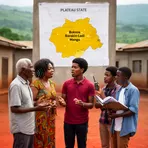
A language spoken in Plateau State, Nigeria, especially around Bokkos, Barakin-Ladi and Mangu
A language people speak in northern Nigeria like Hausa, with dialects Bara and Fika
A language spoken in northern Nigeria, closely related to Hausa, with dialects like Bara and Fika
How Complex
612
1.0
 1
3.4
1
3.4
- Specialized
43
5.6
670
2.1
301
1.0
Surface Forms
Etymology
Language comes from the Latin word lingua, which means 'tongue'. So language is like the 'tongue' of people — the human ability to make and use words to communicate.