
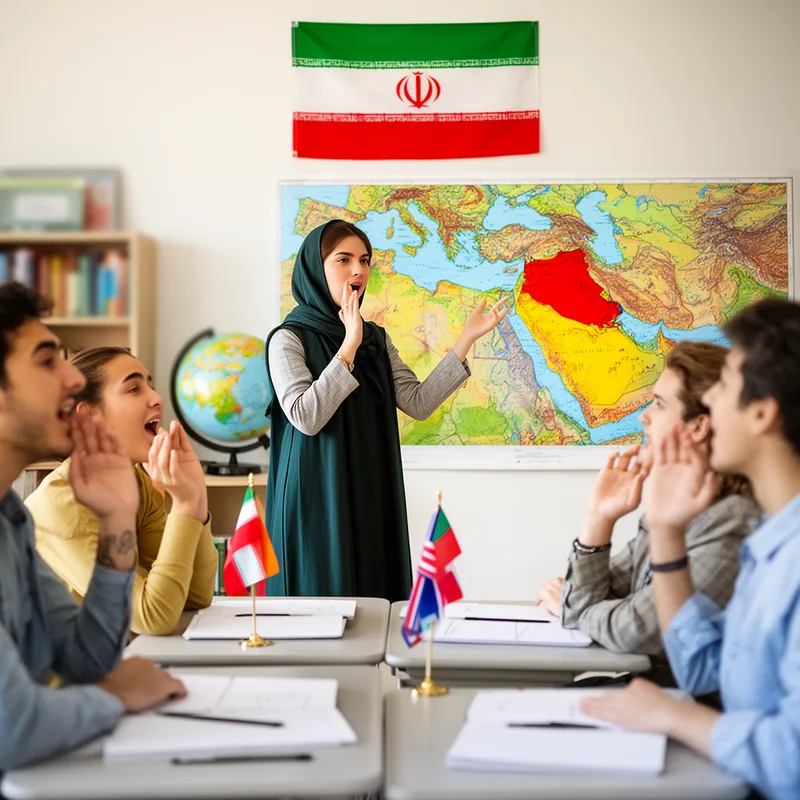
Persian language


 1
4.3
1
4.3
- noun
- /ˈpɜrʒən ˈlæŋɡwɪdʒ/
- The successful candidate will be familiar with a broad range of pre-modern literary traditions and have native or near-native command of the Persian language.
Examples
-
In describing the ways in which they conceptualize mental health, the participants used two words from the Persian language (also known as Farsi) extensively: hal and salamati.
Academic text (2009) -
The Persian language, on the other hand, is limited in terms of level of specificity.
Academic text (2009) -
This term also has a range of meanings in the Persian language that includes nervous, inconvenienced, depressed, and anxious (Pliskin, 1992).
Academic text (2009) -
Most Iranians speak a Persian language called Farsi.
-
In describing the ways in which they conceptualize mental health, the participants used two words from the Persian language extensively: hal and salamati.
Synonyms
 12
4.7
12
4.7
A language spoken mainly in Iran and also in Afghanistan and Tajikistan

The language spoken in Iran, also called Farsi

The language spoken in Persia, now called Iran, especially old forms

A form of the Persian language that people speak mainly in Afghanistan

A form of Persian spoken in Tajikistan and used as the country's official language
A form of Persian spoken by people in central Afghanistan
Surface Forms
Morphology
The phrase is fully compositional: 'Persian' names the national/ethnic identity (and already often the language) and 'language' denotes a system of speech, so a learner who knows both words will readily infer 'the language of Persia/Iran'. The meaning follows straightforward cross-linguistic nationality+language patterns and is therefore immediately understandable to a B1 learner.
Etymology
Persian language comes from the old land called Persia, the old name for 'Iran'. So it simply means the language spoken there today, often called 'Farsi', and it includes old and modern forms used in famous poetry.