
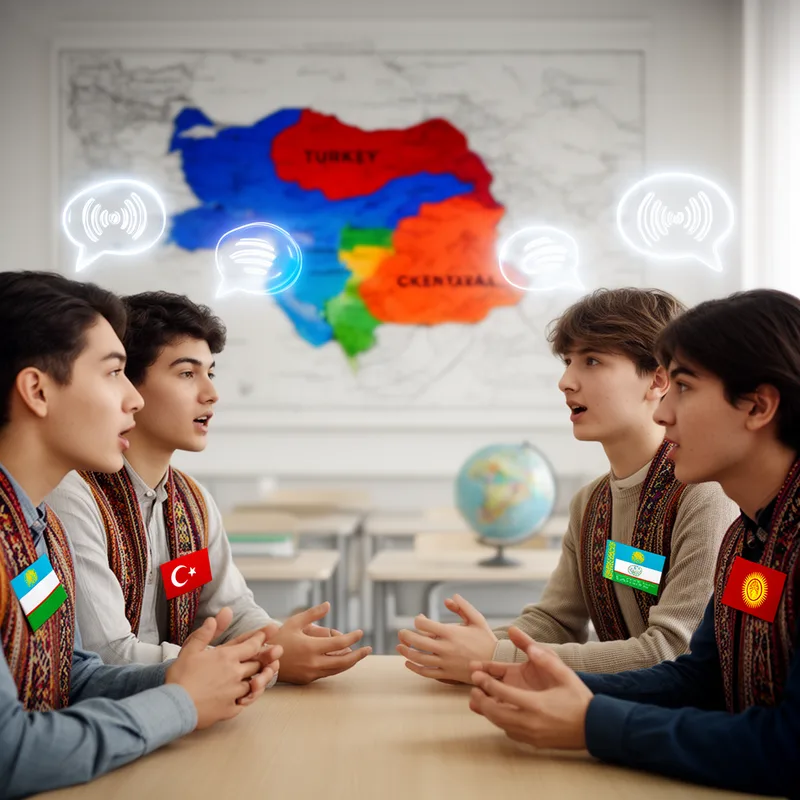
Turkic language
- noun
- Specialized
- In terms of ethnicity, even though they speak a Turkic language, Gagauz define themselves in opposition to Turks, much like other Eastern European Orthodox peoples.
Examples
-
Again, no one here said Hungarians were Turks or that Hungarians speak a characteristic Turkic language.
Blog text (24) -
Hungarian is not a Turkic language.
Blog text (24) -
Similarly, Uzbekistan is a historic product of ethnic mixing, speaks a Turkic language, and has had its early share of ethnic violence.
Academic text (2000) -
Gagauz is the Turkic language (Azeri is a close second) most similar to the Turkish spoken in Turkey, in which I am fluent.
Academic text (2006) -
We do not speak a Turkic language; we are Christians, and we kept Turks/Muslims out of Europe. We have had Armenians in Hungary for many years, and we have treated them very well. In fact, I have distant Armenian blood in my Hungarian family.
Blog text (24) -
Turkish and Uzbek are both part of the Turkic language family.
-
The Turkic language group includes several languages spoken in Central Asia.
-
Kazakh is one of the major Turkic languages used by people in Kazakhstan.
Synonyms

A group of Asian languages including Turkic and Mongolian that some people think are related
Surface Forms
Morphology
The phrase is a straightforward adjective + noun combination: 'Turkic' (relating to Turkic-speaking peoples or their languages) + 'language' (a named system of speech) yields 'a language belonging to the Turkic family.' This compositional meaning follows common cross-linguistic patterns and is directly derivable by a B1 learner who knows both constituents.
Etymology
Turkic language comes from the name of the people called the Turks, who lived across Central Asia long ago. Their speech was called 'Turkic', so today Turkic language means a language spoken by those people, like Turkish, Kazakh, and Uzbek.

