
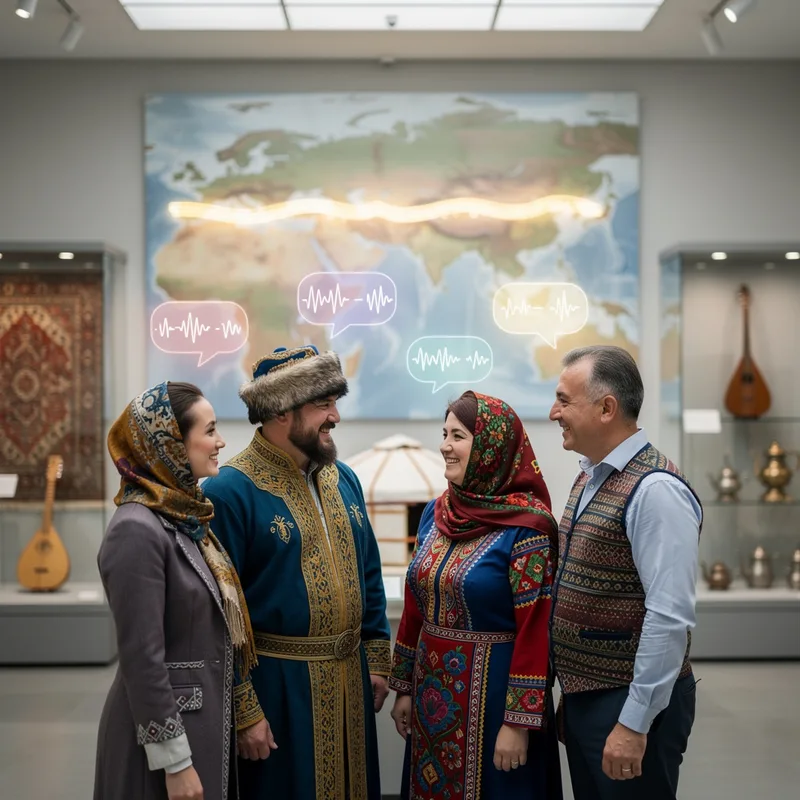
Turkic
 3
8.0
3
8.0

- adjective
- /ˈtɜrkɪk/
- The other theory is that the Azeris are of a Turkic background from Central Asia.
- Turkic people
- Turkic languages
- Turkic republics
Loading YouTube…
Watch on YouTubeThe Bulgars are a Turkic people, some of whom stayed in what's now kind of South Central Russia and converted to Islam.
- The Bulgars are a Turkic people, some of whom stayed in what's now kind of South Central Russia and converted to Islam.
Examples
-
The Bulgars are a Turkic people, some of whom stayed in what's now kind of South Central Russia and converted to Islam.
-
Ottoman Minister of War Enver Pasha had big hopes of spreading his rule to those Turkic speaking regions of Russia and Central Asia after the war.
-
And she knew a few Turkic languages.
Fiction book (2002) -
Our struggle... ...will continue until all Turkic people are united.
-
Turkey's economic ambitions in the new Turkic states did not live up to early expectations.
Academic text (2000) -
Hungarians are clearly a Turkic nation, and their language contains at least 15% of the Turkish vocabulary.
Blog text (24) -
Additionally, 20 percent of Iranians are members of various Turkic ethnic groups sharing cultural and linguistic ties with Turkey.
Blog text (3) -
Azerbaijani national-identity politics differs considerably from identity politics in the other Central Asian Turkic-speaking countries.
Academic text (2000) -
Its closest ties are with neighboring Turkmenistan (Turkic and Sunni), but they focus on transit and energy issues.
Academic text (1996) -
The Kazakhs, Tarak and Berik, proudly maintain their Turkic heritage through language and culture.
Synonyms
Able to speak a Turkic language
Compounds
- Specialized
A language like Turkish or Uzbek that people speak in Central Asia and nearby regions
Surface Forms
Morphology
Etymology
Turkic comes from the name Turk, for the peoples of Central Asia, plus the ending -ic which means 'relating to'. So Turkic describes something connected to the Turk people, their cultures, or their languages.