

fire
 63
5.7
63
5.7

- noun
- /faɪər/
- Informal
- During the debate, the candidate was under fire for his stance on immigration policy.
- come under fire
Loading YouTube…
Watch on YouTubeIt's Donald Trump just training his fire on where he sees the threat.
- It's Donald Trump just training his fire on where he sees the threat.
- They hold other people's feet to the fire about the rules.
- But I've started replying the horrible back fire with fire now.
Examples
-
They hold other people's feet to the fire about the rules.
-
The senator faced intense fire from the press after his controversial remarks.
-
It's Donald Trump just training his fire on where he sees the threat.
-
Administrators are under fire to improve test scores.
Academic text (2003) -
Being a conservative, white, Christian, and a climate skeptic, I draw fire from several different angles.
Blog text (12) -
The question drew sharp fire from two respondents who found it insulting.
Academic text (1993) -
In his Pastorale, Lorich advocated ideas that brought him under fire from both sides.
Academic text (2004) -
As concerns over racial-climate issues roil campuses nationwide, other institutions have come under fire for issuing campus alerts with insufficient information.
Academic text (2016) -
The company's CEO drew serious fire for the lack of transparency in their financial reporting.
Synonyms
 548
3.2
548
3.2
Strong words that criticize someone or something
 36
6.5
36
6.5
A sudden, strong public reaction of anger or criticism
 19
5.6
19
5.6
Strong criticism from many people for something you did
 11
6.8
11
6.8
A strong public attack in words on someone or something
 1
9.1
1
9.1
Very strong criticism that openly attacks a person
 1
3.3
1
3.3
A sudden large amount of criticism aimed at someone or something


 1
9.9
1
9.9
A loud angry speech that attacks a person or idea
Antonyms


Idioms




- Informal
12
8.1
Make someone do what they promised or take responsibility by pressuring them


- Informal
7
5.9
To make a bad situation worse by saying or doing something that makes people angrier





 1
8.9
1
8.9
Save someone from a difficult situation at the last moment



- Informal
Strong energy and passion that continue even when someone gets older

To pay attention to something unimportant instead of the main task


- Informal
Escaping a bad situation and ending in a much worse one


- Archaic
To cause great excitement or a big effect, often said to mean something is not impressive

Compounds

 73
1.1
73
1.1
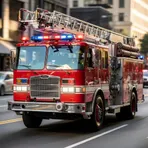
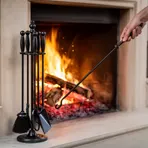
A group that sends people to put out fires and help in emergencies in the local area
 51
2.7
51
2.7
A staircase or metal ladder on the outside of a building used to get out during a fire





- Formal
13
3.8
A person who makes sure buildings are safe from fire, investigates fires, and enforces fire safety rules
 12
2.4
12
2.4
A practice where people leave a building to be safe during a fire or other emergency





- Specialized
3
7.7
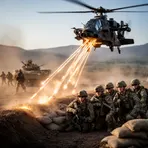
Intense gunfire aimed near an enemy to keep them from shooting back while friendly troops move


- Formal
3
3.4
A set of rules made by authorities about buildings to prevent fires and keep people safe

- Informal
3
7.4
A very difficult test that shows if someone can do a job under pressure





- Specialized
1
7.1
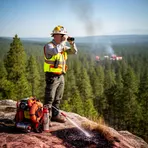
A slow burn in the layer of dead leaves and wood under the soil, often without visible flames


- Specialized
1
5.9
Gunfire from the ground aimed at enemy planes to stop an air attack


- Specialized
1
8.2
Shooting at a target you cannot see using calculations or people who watch

- US
1
7.3
A large fast fire that burns across dry grassland and spreads quickly in strong wind
- Specialized
1
7.8
Continuous gunfire aimed at an enemy to stop them firing or moving so friendly troops can advance


- Specialized
1
6.8
A system that uses radio waves to aim and fire weapons at military targets
- Specialized
1
7.0
Gunfire by other soldiers or tanks that protects attacking soldiers from the enemy


- Specialized
1
8.2
A fast forest fire that moves through the tops of trees, often moving ahead of the fire on the ground

- Specialized
1
9.9
Gunfire that goes along the length of a line of soldiers, causing heavy damage

- Specialized
1
7.7
A serious disease caused by bacteria that makes apple and pear shoots and flowers turn black and die

- Specialized
1
6.1
A system that finds and aims weapons at military targets on ships or tanks


- Specialized
1
9.9
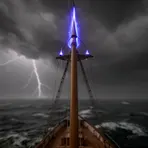
A blue glow that appears on pointed objects like ship masts or airplane wings during thunderstorms

- Specialized
Gunfire aimed near friendly troops to protect them from immediate enemy threats


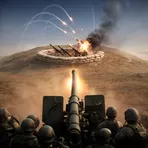
- Specialized
Fire from guns aimed at enemy mortar positions to destroy or stop them

- Specialized
A planned heavy attack with artillery to weaken enemy forces before an assault

- Specialized
Fire from heavy guns at enemy targets far behind friendly troops to disrupt supplies and reinforcements
How Harsh

Surface Forms
Etymology
Fire comes from the old word fyr meaning 'flame', and people often compare sharp attack or criticism to directing flames at someone. That's why being 'under fire' means facing strong public attack or criticism.