
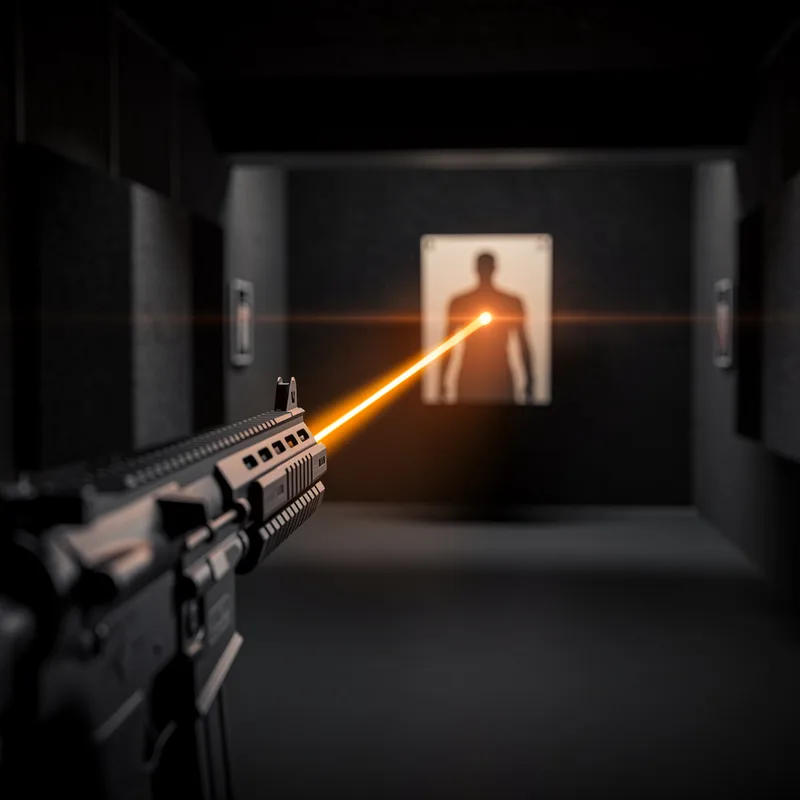
line of fire
 11
5.5
11
5.5

- noun
- Specialized
- Mr. Pike walked directly in my line of fire.
- directly in the line of fire
- right in the line of fire
- clear line of fire
Examples
-
The instructor reminded everyone to always check their line of fire before firing the weapon.
-
We can move in and rescue them even if we're in the line of fire.
Blog text (10) -
I would have moved further down the line of fire.
-
Check your line of fire.
-
Stay out of the line of fire.
Fiction book (1994) -
Then I stepped back to clear the line of fire.
Fiction book (1995) -
I don't want any of them in the line of fire.
Fiction book (1990) -
Kearney looked up to the cabin and saw that he was well within the line of fire.
Fiction book (1995) -
Bodhi yanks Utah out of the line of fire.
Fiction book (1991) -
Lily moved to Alsayid and helped him drag Yehoshua out of the line of fire.
Fiction book (1990)
Synonyms
 141
7.0
141
7.0
A curved path a moving object like a ball or rocket follows through the sky


 1
7.0
1
7.0
The path something moves along through the air
Antonyms
Surface Forms
Morphology
The phrase combines 'line' (a position or formation) and 'fire' (shooting) in a literal spatial relation: being in the path where firing is directed. A B1 learner who knows both words can readily infer that someone 'in the line of fire' is exposed to danger or attack; the metaphorical extension to criticism is also an obvious pragmatic transfer, so the expression is compositionally transparent.
Etymology
Line of fire comes from soldiers and shooters who used it to name the straight line where a gun's fire sends bullets, so anything in that line can be hit. That's why it means 'the path a bullet travels' and being in real danger.