

barrage fire
- noun
- /bəˈrɑːʒ faɪər/
- Specialized
- The army unleashed a barrage fire to protect the advancing infantry from enemy positions.
Examples
-
Before the assault, a barrage fire was used to weaken enemy defenses.
-
The noise of the barrage fire echoed across the valley for hours.
-
The barrage fire was intense.
-
During the war, they faced a barrage fire daily.
-
Before the assault, a barrage fire was used to weaken enemy defenses.
-
The army unleashed a barrage fire to protect the advancing infantry from enemy positions.
-
The noise of the barrage fire echoed across the valley for hours.
Synonyms

 51
8.3
51
8.3

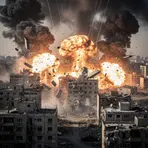
Firing large guns at an area, often not aimed at a specific target
 47
7.0
47
7.0
A long, heavy attack with bombs or large guns on a place
 14
7.6
14
7.6
A heavy continuous attack by large guns across an area
 7
6.9
7
6.9
A heavy attack by military guns and cannons on enemy positions
 7
7.9
7
7.9
Soldiers fire explosive shells in a high arc at a target from the ground
 3
4.9
3
4.9
Loud shots from large guns used in an attack

Artillery or mortar guns fire in one direction with changing elevation to hit different distances across a target area

A long, very loud attack by many heavy guns firing rapidly
Antonyms


How Intense
- NSFW

 1
8.2
1
8.2

- Specialized
47
7.0
- Specialized
- Specialized
Surface Forms
Morphology
The meaning is directly and transparently derived from 'barrage' (sustained artillery fire to saturate an area) and 'fire' (the firing of guns); combined they straightforwardly denote heavy, continuous artillery firing over a wide area. This is a simple noun+noun composition following normal English compounding, so a B1 learner who knows both constituents would readily infer the MWE's meaning.
Etymology
Barrage fire comes from the word barrage, which once meant a 'barrier' or 'wall', and the word fire meaning shooting from guns. Soldiers pictured a continuous wall of shells from big guns, so barrage fire means heavy, continuous shooting meant to cover an area rather than aim at one target.