
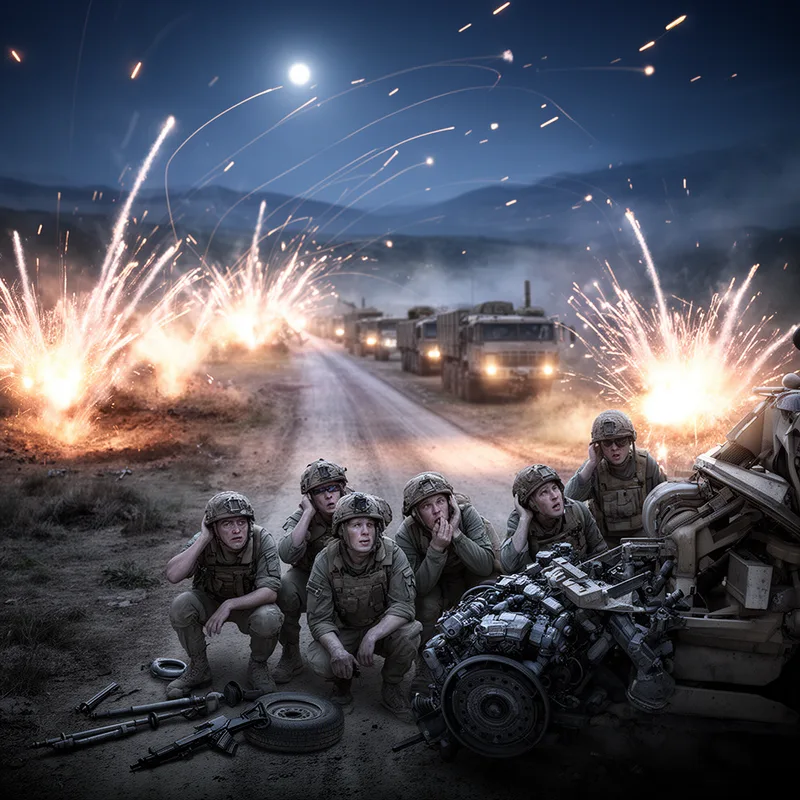
harassing fire
- noun
- /həˈræsɪŋ faɪər/
- Specialized
 :
fuego de hostigamiento
:
fuego de hostigamiento
- The commander ordered a pattern of harassing fire to unsettle the advancing enemy forces.
Mortar rounds were really happening a lot, impacting all over the fire base, constantly just harassing fire.
- Mortar rounds were really happening a lot, impacting all over the fire base, constantly just harassing fire.
Examples
-
During the battle, the soldiers endured harassing fire all night.
-
Throughout the night, as embarkation proceeded, the support ships maintained a planned schedule of harassing fire to disrupt enemy movements.
-
Harassing fire was used to disrupt enemy supply lines and prevent repairs to their defenses.
-
The artillery unit laid down harassing fire throughout the night to keep the opposing troops awake.
-
The troops faced constant harassing fire from the enemy.
-
Wolfe anchored the right of his line on the St. Lawrence, despite the harassing fire from French and Native American sharpshooters.
-
The Muslim horse archers kept up a continual harassing fire to fatigue the enemy while looking for any weaknesses.
Synonyms
 1
7.8
1
7.8

Continuous gunfire aimed at an enemy to stop them firing or moving so friendly troops can advance

Weapons fired into an area to stop enemy troops moving through it
Antonyms
- Specialized
1
7.0
Gunfire by other soldiers or tanks that protects attacking soldiers from the enemy
How Intense
- Specialized
14
7.6
 47
7.0
47
7.0
- Specialized
1
7.8
- Jargon
- Specialized
Surface Forms
Morphology
The noun phrase is a straightforward composition of 'harass' (to make repeated small attacks/exhaust) and 'fire' (gunfire), literally meaning gunfire used to harass rather than to inflict heavy casualties. This compositional pattern (adjective/participle + noun) is transparent and cross-linguistically common, so a B1 learner who knows the constituent words should be able to infer the MWE's meaning.
Etymology
The term harassing fire comes from soldiers using small, repeated fire to harass the enemy by keeping them awake and stopping their movement. That's why it means 'gunfire meant to bother or tire the enemy'.