

criticism
 512
3.0
512
3.0

- noun
- /ˈkrɪtɪsɪzəm/
- Many young writers struggle to accept criticism from editors during the publication process.
- face criticism
- attract criticism
- public criticism
Loading YouTube…
Watch on YouTubeSo do you mind if we go through some potential criticisms of Bitcoin?
- So do you mind if we go through some potential criticisms of Bitcoin?
- There's so much judgement and so much criticism on social media now.
- Stu pointed out his criticism of the war in Ukraine.
- And there have been a lot of criticisms of this work.
- And to a large extent, the criticism is deserved.
- It's deadly to listen to criticism at the wrong point.
- Because when you're being subject to that kind of criticism, it feels very personal.
- Around that period of time, there was quite a lot of criticism towards you.
- We all fear this criticism and that that's OK.
- So and what is what is the biggest criticism towards Kate?
- I love Charles Barkley but his criticism Kanye was idiotic.
- And how should someone deal with criticism, hate those things?
Examples
-
I think some people give criticism to wound.
-
In any case... why should we have to bear any more criticism for failure than we have to.
-
Now, I do not take criticism in any bad light.
-
And how should someone deal with criticism, hate those things?
-
Because I hear myself talk to you, and what is it but criticism after criticism?
Fiction book (1992) -
Did you ever feel that kind of criticism from your peers or your teachers?
-
And to a large extent, the criticism is deserved.
-
We all fear this criticism and that that's OK.
-
So, you know, we're prepared to take the criticism, because you know, we've put ourselves out there, and we're well prepared to take that.
-
There's so much judgement and so much criticism on social media now.
Synonyms
 141
7.4
141
7.4
A formal statement expressing strong disapproval of someone
 56
5.5
56
5.5
A strong statement saying someone or something is wrong
 45
3.0
45
3.0
A feeling that shows you do not agree with someone or what they do
 24
6.1
24
6.1
A formal complaint from someone in charge about bad behaviour
 22
6.8
22
6.8
A strong comment that shows disapproval of someone's actions
 12
7.4
12
7.4
A public statement that strongly criticizes someone or something
 6
7.3
6
7.3
Saying negative things about yourself to make praise seem less important
 5
8.4
5
8.4
Unfair criticism that makes someone or their work seem bad
 4
4.2
4
4.2
Very strong negative comments that show disapproval
 3
8.1
3
8.1
Talking about someone in a way that shows dislike and makes them seem unimportant
 3
7.2
3
7.2
A strong spoken scolding for a mistake
 2
7.1
2
7.1
A mild criticism that aims to correct someone
 2
7.7
2
7.7
A very harsh review that strongly criticizes a book, film, or product
 1
7.7
1
7.7
A public statement that strongly criticizes someone or something


 1
7.5
1
7.5
A spoken or written sign of disapproval of someone's actions
 1
9.9
1
9.9
Speaking badly about a person or thing to show you do not approve
 1
9.5
1
9.5
A strong moral disapproval from other people
 1
4.6
1
4.6
Small unkind complaints about unimportant things that do not help
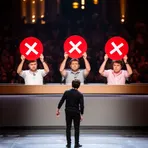
An opinion or decision that says something is not good

Strong criticism of someone's actions

Very harsh comments that make someone feel hurt

Always finds and criticizes small mistakes in others
Antonyms


Compounds



- Specialized
1
8.9
A study of different copies of a writing to find its original words




- Archaic
A way of studying literature that focuses on a text's language and form, not the author's life or history
How Harsh

Surface Forms
Morphology
Etymology
Criticism comes from a Greek root krit- that means 'judge', the same root as critic and critique. So when someone gives criticism in this sense they are 'judging' and pointing out faults, which is why criticism often means disapproval.