

to mellow out
 10
6.3
10
6.3

- phrasal verb
- /ˈmɛloʊ aʊt/
- Informal
- My boy has been in first grade for a few weeks now—our schedules are starting to mellow out and become commonplace.
- just mellow out
- try to mellow out
- really mellow out
Loading YouTube…
Watch on YouTubeSo then I think it's kind of mellowed out a little bit.
- So then I think it's kind of mellowed out a little bit.
Examples
-
Let Halloween be a time to mellow out a little bit.
Blog text (4) -
Mellow out a little and enjoy the surfing brothers!
Blog text (8) -
- Hey, man, just mellow out, man.
-
And I came in here to mellow out.
Fiction book (1991) -
My friends also started to mellow out a bit.
Blog text (30) -
I'm now mellowing out a bit more, coming to terms with faith.
Blog text (4) -
Max calls in a pizza order, then mellows out in the lounger, watching the news.
Fiction book (1994) -
Well, for the first few years, that'll be me, and then maybe I'll mellow out.
Fiction book (1991) -
Since you're getting older, it won't be unexpected for you to mellow out.
-
After a long week at work, I like to mellow out by spending time with friends.
Synonyms
 ∞
1.0
∞
1.0
To feel less nervous and more calm
 962
1.0
962
1.0
Make a person or animal less upset
 594
1.4
594
1.4
To become less angry, excited, or upset
 540
2.8
540
2.8
To become calm and still after movement or excitement
 223
4.0
223
4.0
To relax and do very little
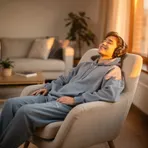 99
4.9
99
4.9
To relax and become calm after you feel upset
 69
4.1
69
4.1
To become or make someone feel more cheerful and relaxed
 57
3.7
57
3.7
To make something less strong or strict
 56
2.5
56
2.5
To become quiet and calm after being excited
 55
6.2
55
6.2
To calm down and stop being angry or excited
 50
2.7
50
2.7
To become calmer, less angry, or less hot
 39
3.7
39
3.7
To relax after a busy or stressful time and slowly come to an end
 35
3.4
35
3.4
Become relaxed and less tense after work or a stressful time
 31
3.4
31
3.4
To relax and become less nervous or tense
 31
4.0
31
4.0
To become or make something softer, gentler, and more pleasant
 19
2.5
19
2.5
Feel less angry or excited
 16
4.2
16
4.2
Feel calm and not worried after someone reassures you
 14
4.1
14
4.1
To become calm after strong feelings or to tell someone else to calm down
 12
3.9
12
3.9
Relax and enjoy yourself without worrying
 11
4.2
11
4.2
Relax and become less tense after work or stress
 9
4.0
9
4.0
To become gradually less strong or severe
 5
3.4
5
3.4
To feel relaxed and relieved after a worrying time
 3
4.6
3
4.6
Make someone or something less noisy and calmer
 2
8.6
2
8.6
Calm down and relax after feeling stressed or excited


 1
5.6
1
5.6
Relax and become less tense or formal

Make a tense person or situation feel more relaxed
Antonyms

How Relaxed
- Informal
10
6.3
 35
3.4
∞
1.0
35
3.4
∞
1.0
- Informal
594
1.4
57
3.7
Surface Forms
Morphology
The sense 'to become more relaxed' is directly derivable from combining 'mellow' (to become gentler/relaxed) with the particle 'out', which here signals a change into that state. This follows a common verb+out phrasal pattern and is semantically compositional, so a B1 learner who knows both constituents would very likely infer the meaning.
Etymology
The phrasal verb mellow out comes from the image of fruit becoming soft and sweet as it ripens. The word mellow named that soft, gentle state and out shows the change is finished, so to mellow out means to become calmer and more 'relaxed'.