
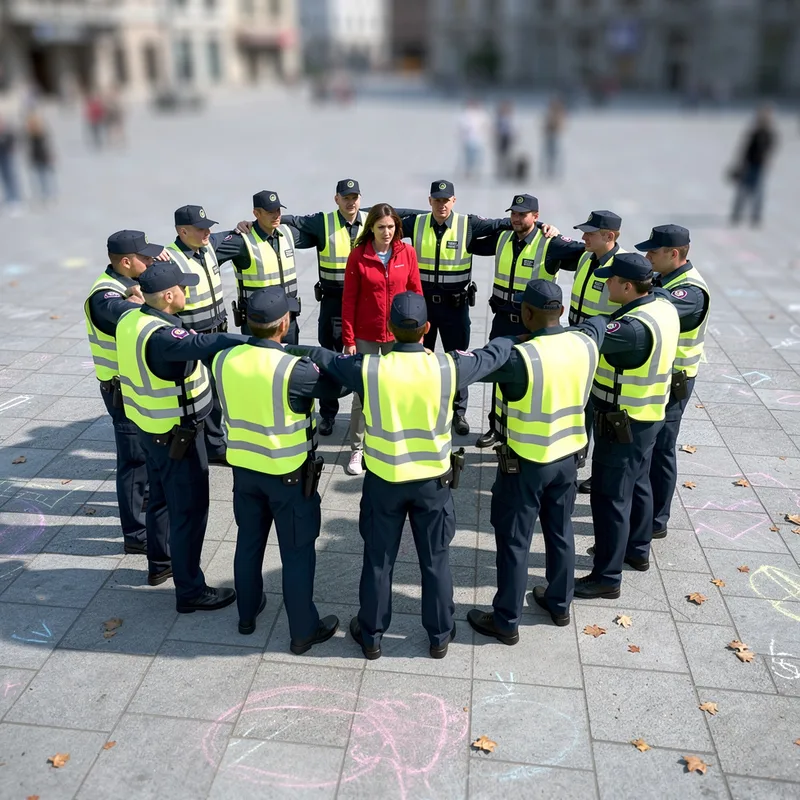
to hem in
 6
6.7
6
6.7

- phrasal verb
- /hɛm ɪn/
 :
encerrar
:
encerrar
- The kids felt hemmed in by the tall fences surrounding the playground.
- hemmed in from all sides
The subordination of all life to these systems that hem us in?
- The subordination of all life to these systems that hem us in?
- It it, I won't say traps him, but it does sort of hem him in.
- But for the guys on the ground, they often feel very frustrated by how hemmed in they are, You know, Yeah.
Examples
-
The golem, hemmed in by tourists, makes the circuit along a narrow path.
Fiction book (1996) -
When he was on the bus, standing hemmed in by furs and backpacks, he thought of going to the police.
Fiction book (1995) -
Look, l have no desire to be hemmed in.
-
But for the guys on the ground, they often feel very frustrated by how hemmed in they are, You know, Yeah.
-
Hell, I don't like being hemmed in any more than you do, but here we sit.
-
I don't want to talk about this, but they got me hemmed in.
-
"No wonder Dad felt hemmed in by the Kellys," I said.
Fiction book (2001) -
But the crowding fog hemmed her in, blocking off her options.
Fiction book (1994) -
No town, really, just a crossroad, a post office, and farms hemmed in by cornfields.
Fiction book (2002) -
The dark purple hills hem in the silver-green orchard and close off the horizon.
Academic text (1993)
Synonyms
 ∞
1.7
∞
1.7
To be all around a person or thing on every side
 215
4.2
215
4.2
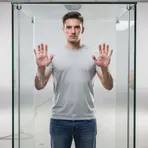
Keep someone or something within limits, for example in a small space
 119
4.6
119
4.6
Surround or enclose a place by bringing things nearer from all sides
 106
4.8
106
4.8
To keep something within set limits, for example in a room or a topic
 93
4.9
93
4.9
To force a person or animal into a place they cannot leave
 86
4.6
86
4.6
Hold a person or thing so it cannot move freely
 70
3.9
70
3.9
To keep something inside so it cannot escape by closing or locking
 46
3.2
46
3.2
Push people or things together so they cannot move easily
 19
8.3
19
8.3
To surround a place with soldiers until the people inside give up
 18
8.3
18
8.3
To keep people or animals in a small space so they cannot move freely
 8
4.7
8
4.7
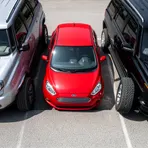
To stop a person or thing from moving, acting freely and making choices
 7
5.8
7
5.8
To build a barrier around something to keep people in or keep others out
 3
9.5
3
9.5
To surround a place with soldiers to force it to give up
 2
5.4
2
5.4
To put someone or something into a small space with bars to stop them moving freely
 1
8.2
1
8.2
To surround an enemy to make them give up
 1
9.9
1
9.9
To lock someone inside a room or building against their will


 1
6.4
1
6.4
To keep a person or animal inside a small space like a cage

Surround something completely so it cannot get out or move

To hold back or make it hard for someone to act freely
Antonyms


How Restricted

Surface Forms
Morphology
hem + in
The particle 'in' signals enclosure, and there is a plausible compositional link if 'hem' is understood as 'to border or enclose', so part of the meaning can be inferred. However, 'hem' is low-frequency and often known primarily as the cloth edge, so the specific sense 'to surround closely' is not reliably predictable for a B1 learner without prior exposure.
Etymology
Hem in comes from sewing: a hem is the folded edge of cloth that keeps the fabric in. So to hem someone in imagines surrounding them with a tight border that stops them moving, meaning 'to restrict'.