
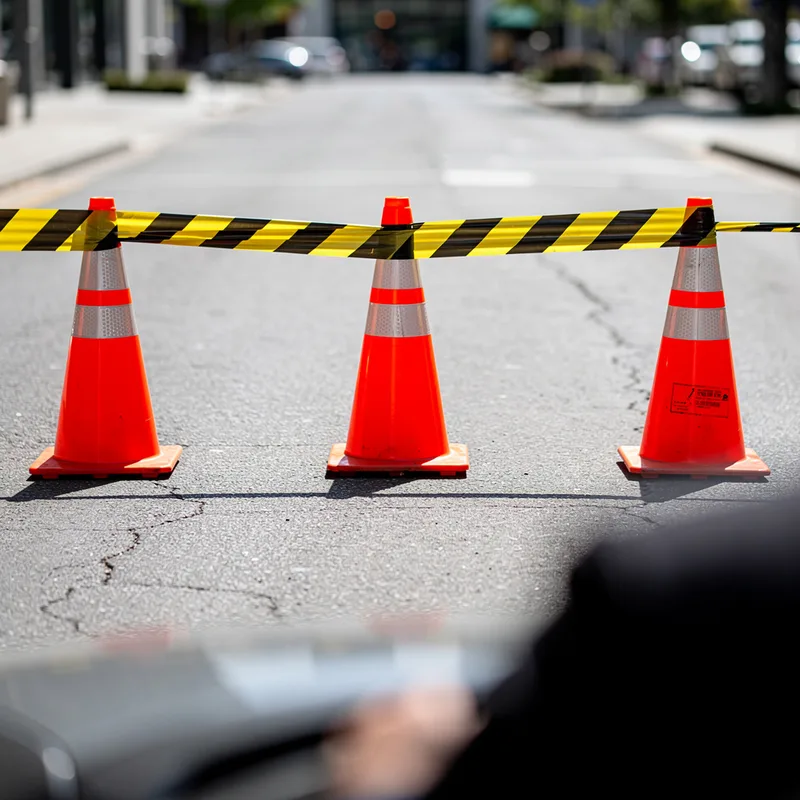
to close off
 24
3.9
24
3.9

- phrasal verb
- /kloʊs ɔf/
- After the accident, they had to close off access to the bridge until it was repaired.
- close off the flow
Loading YouTube…
Watch on YouTubeAnd so you those options are closed off in what I'm doing.
- And so you those options are closed off in what I'm doing.
- That's that's still a man that is not going to close off his other options.
- It gets starts to get closed off and the nerve roots get pinched, if you will.
- There are certain possibilities that have been, we might say, closed off.
- So they have an extra pair of eyelids and so they can close it off and then see through them and swim around.
Examples
-
We've closed off all bridge access in and out of town.
-
Try to ventilate the room to the outside and close it off from the rest of the house.
Academic text (1997) -
I saw that King George Street had been closed off except for emergency vehicles.
Fiction book (1998) -
Rather, it is a room we can actually close off with a glass door.
Blog text (4) -
- So how do you plan to close off the canal?
-
In a few minutes, this rear exit that makes this place seem safe, is gonna be closed off.
-
If we close off those valves, I think we got it.
-
Traffic was snarled for several hours as police closed off the scene, causing a surge of complaints from the area's tony business owners.
-
A large swathe of the campus will be closed off, including the plaza where the Free Speech Movement began in the 1960s.
-
The city decided to close off the main road for construction, preventing all traffic from entering.
Synonyms
 ∞
1.0
∞
1.0
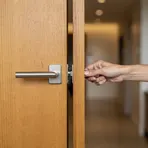
To close something so it is not open
 ∞
1.0
∞
1.0
To shut something so it is not open
 620
3.8
620
3.8
To stop something suddenly before it is finished
 99
3.8
99
3.8
To stop something from entering, being included, or being thought about
 84
3.7
84
3.7
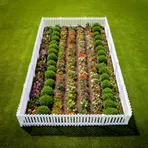
Surround something completely, often with a wall or fence
 47
3.9
47
3.9
Stop people from entering or leaving an area by blocking it
 23
3.8
23
3.8
Close a road, path or entrance so people cannot go through
 20
6.3
20
6.3
Stop people entering or leaving an area by using police and barriers
 15
3.7
15
3.7
To bring the edges of something together so there is no gap
 11
4.0
11
4.0
Prevent someone or somewhere from having contact with others
 9
6.0
9
6.0
To stop people and goods entering or leaving a place, often during war
 9
6.4
9
6.4
To stop something from continuing or becoming known
 6
6.4
6
6.4
To stop a supply by blocking its source or flow
 5
8.4
5
8.4
Block an opening to stop the flow of liquid or air
 4
3.8
4
3.8
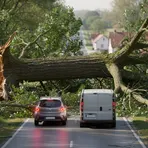
To stop movement through a road, pipe, or path
 4
3.7
4
3.7
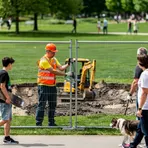
Surround an area with a fence to stop people from entering
 3
4.8
3
4.8
To keep people out of an area by putting ropes around it
 3
5.5
3
5.5
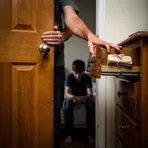
Keep people and things in a place where they cannot leave or be seen
 1
1.9
1
1.9
Close something tightly so nothing can get in or out
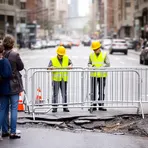
To block a place so people cannot enter, often by putting up a fence

Surround something completely on all sides to shut it in

To block an opening to stop liquid or gas passing through

To close a bottle or jar with a small plug

Surround something completely so it cannot get out or move

To make part of a room private by closing a curtain
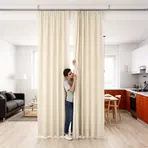
To divide a space with a wall or curtain to make a new area
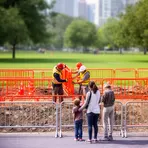
To separate people or part of a place by putting up a barrier
Antonyms

How Accessible

Surface Forms
Morphology
The sense 'to block or prevent access' is directly built from 'close' (to shut) plus the particle 'off' signaling separation or cutting something off, so the overall meaning is a straightforward compositional extension. This verb+particle pattern is common and predictable, so a B1 learner who knows the constituents and basic particle use would readily infer the meaning.
Etymology
Close off comes from the simple image of shutting something: close means 'to shut' and off means 'away' or 'separate', like closing a road and putting up a barrier so people cannot enter. That's why it means 'to block' or stop people from entering.