

chemical reaction
 24
3.1
24
3.1

- noun
- /ˈkɛmɪkəl rɪˈækʃən/
- Specialized
- When you mix baking soda and vinegar, a chemical reaction produces carbon dioxide bubbles.
- chemical reactions at the molecular
- inorganic chemical reactions
- complex chemical reactions
Loading YouTube…
Watch on YouTubeSo our first prediction is that a chemical reaction should go faster when it's hotter.
- So our first prediction is that a chemical reaction should go faster when it's hotter.
- There they undergo chemical reactions which create the nucleotides.
- Is this trying to predict different chemical reactions?
- Well, we are sustained by oxygen, by this continuous chemical reaction.
- Mitochondria are parts of cells which can create energy from chemical reactions.
- That nice fresh grass smell is actually a chemical reaction that signals predators, humans.
- It's you know what it needs to reproduce itself just by chemical reaction, just by mechanics and physics.
- Or you cook for this long and the reason why you brown the meat is to get this chemical reaction take place, right?
Examples
-
Eventually, the temperature becomes high enough that chemical reactions change the makeup of the gas.
Academic text (2011) -
My theory is that any strong emotion, like love or heartbreak, is nothing more than a series of chemical reactions in the brain.
-
Or you cook for this long and the reason why you brown the meat is to get this chemical reaction take place, right?
-
So yeah, it's, it's kind of a chemical reaction that happens in your eye.
-
Now this is just an exercise to show that you can in principle take any chemical reaction and use it to move things.
-
It's literally a chemical reaction.
-
Baking is a chemical reaction!
-
How do we interpret the present chemical reaction within the community and between the Church and society?
Academic text (2003) -
Light contacting these cells creates a series of complex chemical reactions.
Academic text (2003) -
Love isn't an opinion, it's a chemical reaction.
Synonyms
 123
3.0
123
3.0
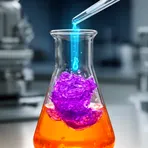
A process where substances change and form new substances
 20
6.8
20
6.8
Making a chemical by combining simpler substances
 7
7.8
7
7.8
A chemical reaction where one substance gives electrons and another receives them
 4
3.5
4
3.5
A process that changes the tiny particles that make a substance
 1
7.4
1
7.4
A process in which water breaks a substance into smaller parts that become new substances
 1
4.2
1
4.2
A chemical change that gives off heat to the area around it
 1
3.7
1
3.7
A process that turns one substance into a different one by changing its atoms or molecules
 1
5.9
1
5.9
A chemical change that takes in heat from the area around it

 1
6.0
1
6.0
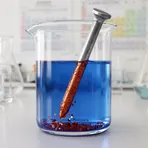
A reaction where a more reactive element replaces a less reactive one in a compound

A process in which substances change into new substances, for example rusting or cooking

A chemical reaction where one compound breaks into two or more different substances
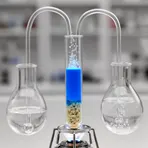
A reaction where one compound breaks into two or more simpler substances
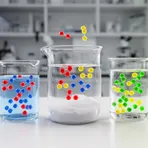
Two compounds swap parts to make two new compounds
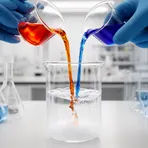
A reaction where an acid and a base make salt and water
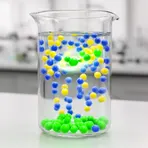
A chemical reaction where one product makes the reaction happen faster

A chemical change in a living thing that proteins make happen faster
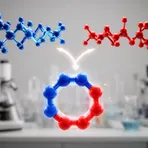
A reaction where two or more molecules join to make a ring
How Fast
- Specialized
336
5.5
 ∞
1.0
∞
1.0
- Specialized
24
3.1
∞
1.0
- Specialized
Surface Forms
Morphology
The noun phrase combines 'chemical' (relating to chemistry) with 'reaction' (a process or response), so its meaning — a process in which chemicals change — is directly compositional and derivable from the parts. This modifier+noun pattern is common cross-linguistically (e.g. reacción química, réaction chimique), so a B1 learner who knows both words will grasp the MWE.
Etymology
Chemical reaction gives a simple picture: a chemical is a substance and a reaction is what happens when things meet and change. Imagine two liquids mixing and making a new gas or a new colour—this image shows why it means 'a process where one substance changes into a different substance'.