
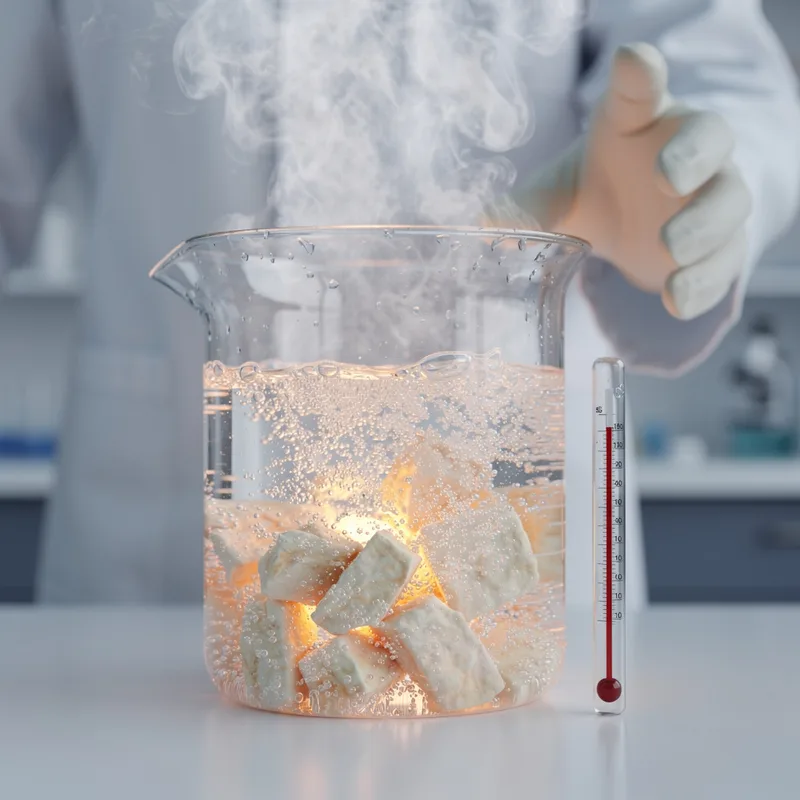
exothermic reaction
 1
4.2
1
4.2

- noun
- /ˌɛksoʊˈθɜrmɪk rɪˈækʃən/
- Specialized
- The combustion of wood in a fireplace is an example of an exothermic reaction that warms the surrounding area.
Loading YouTube…
Watch on YouTubeBecause the reaction of dissolving sulfur trioxide into water is an extremely exothermic reaction, generates a ton of heat.
- Because the reaction of dissolving sulfur trioxide into water is an extremely exothermic reaction, generates a ton of heat.
Examples
-
Kvothe explicitly says to Elxa Dal that fire isn't a thing; it's an exothermic reaction.
Blog text (12) -
Because the reaction of dissolving sulfur trioxide into water is an extremely exothermic reaction, generates a ton of heat.
-
So let's consider an exothermic reaction first.
-
All right, so now let's consider a case for this exothermic reaction where we're going to increase the temperature.
-
The triggered exothermic reaction took less than a minute to work its wonders.
Fiction book (2002) -
With the chemical compounds and the gypsum creating an exothermic reaction that will then help steam the water out at the same time as it hardens the plaster.
-
It's an exothermic reaction on one level, but it's a primal element on another, and you have to understand that to name it—as the wind can be the thing that blows Ambrose to the ground or what makes D breathe.
Blog text (12) -
When magnesium is burned in air, the exothermic reaction produces heat and light.
-
During the experiment, we observed that the exothermic reaction released a significant amount of heat.
Antonyms

How Exothermic
- Specialized
1
4.2

- Specialized
- Specialized
1
5.9
Surface Forms
Morphology
The phrase is fully compositional: 'exothermic' denotes producing or releasing heat and 'reaction' denotes a chemical process, so together they straightforwardly mean a chemical reaction that releases heat. This adjective+noun pattern is a standard, predictable combination (and has direct cognates in many languages), so a B1 learner who knows both constituents can infer the MWE meaning.
Etymology
The term exothermic reaction comes from Greek parts: exo- meaning 'out' and -thermic meaning 'heat'. So it paints the image of heat moving 'out' from the reaction into the surroundings, which is why it means a reaction that 'releases heat'.