
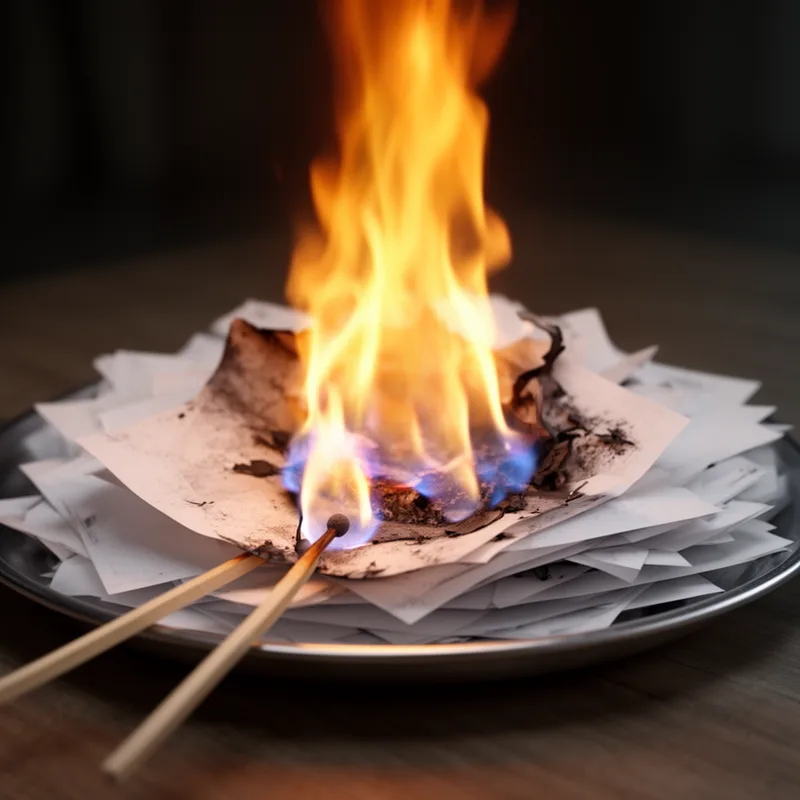
to blaze up


 1
4.9
1
4.9
- phrasal verb
- /bleɪz ʌp/
- The light blazed up to swarm the ceiling like a thousand summer bees threatening, by their very flight and friction, to ignite the dry beams.
- the fire blazed up
Examples
-
Pain blazed up his leg, and he cried out once—before the quarx panicked, shut off the pain impulses; and then his consciousness, too.
Fiction book (1994) -
As he slams the table, Treebeard's jars of light blaze up into fires.
Blog text (4) -
Just blaze up and roll the top down
-
Her closeness made the fire blaze up within me once again.
Fiction book (1990) -
This 4th of July, every toker in America should blaze up in public.
Blog text (23) -
At the edge of the field, she collected downed hickory limbs and dry jack pine, pitched them on the fire, and it soon blazed up and heated a wider circle of air.
Fiction book (1997) -
I added some twigs, and the fire began to blaze up brightly.
-
As the logs caught flame, the fire started to blaze up intensely.
-
With a gust of wind, the campfire could blaze up and spread quickly.
Synonyms
 181
2.3
181
2.3
To produce light and heat from fire
 66
4.0
66
4.0
To make something start burning
 58
3.4
58
3.4
To burn or shine with very bright light
 34
1.7
34
1.7
To burn or shine with a bright, hot light
 32
2.6
32
2.6
To start burning suddenly
 18
4.2
18
4.2
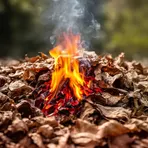
To burn or shine with a sudden bright light
 8
7.4
8
7.4
To catch fire or make something burn
 3
4.6
3
4.6
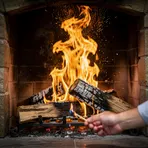
To light up suddenly with a strong flame or bright light
 1
4.6
1
4.6
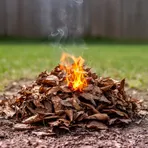
To suddenly start burning strongly or become much more intense
 1
4.8
1
4.8
Start burning and produce flames
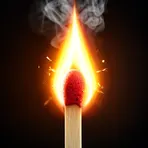
To start to burn suddenly and brightly

To catch fire suddenly
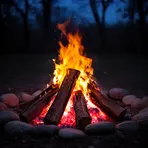
To burn with a bright flame or glow
Antonyms


How Bright

Surface Forms
Morphology
The base verb 'blaze' already means to burn with fierce light or flame, and the particle 'up' commonly adds a sense of onset or intensification (to flare or increase). Together they yield a meaning that is directly and predictably derived from the constituents, so a B1 learner who knows both words should be able to infer 'to begin burning brightly/intensely.'
Etymology
Blaze up comes from the clear image of a fire's flames suddenly shooting up into a bright blaze. So it now means 'to begin burning brightly and intensely'.