

to push away
 43
3.2
43
3.2

- phrasal verb
- When I'm feeling vulnerable, I tend to push away those who want to help me.
- push away people
- try to push away
- keep pushing people away
Loading YouTube…
Watch on YouTubeThe lying really pushed away the help that I needed.
- The lying really pushed away the help that I needed.
- Another way to push a good man away, lack of appreciation.
- They push you away when they need you the most.
- So the bonus reason why men push good women away is because he's already taken.
- And his friends and family have been pushed away, but he can't see it.
- Meaning by being loud and obnoxious and so on, it pushes away the thoughtful people.
- But in this moment, what happens is we end up pushing away because now we're scared to get hurt.
- And because I think sometimes if you push too much, you can push them away.
- You're now wife in a way that didn't just potentially push love away from you, but also hurt other people.
- So my question for you is what behaviors do men do that actually push you away?
- There are why would why would a man push another man away?
- So these are thoughts or feelings that push them away.
- And it's making me feel like I want to push away.
- But it is it is pushing beings away.
Examples
-
I was doing exactly the wrong thing, pushing him away.
Fiction book (1997) -
I am so sorry that I pushed you away.
-
And you were either so afraid of it that you push it away, or you long for it like I did.
-
The lying really pushed away the help that I needed.
-
But you, but you pushed me away from this.
-
Your dad is reaching out to you, and you keep pushing him away.
-
I regret that now more than anything because that is what pushed you away from me.
Blog text (30) -
They push you away when they need you the most.
-
All I can say is I'm just so sorry for treating you like I did and for pushing you away.
-
If you start pushing people away, eventually they just leave you alone... with your thoughts, with your demons, with the sound of your own breathing.
Synonyms
 590
1.6
590
1.6
Keep a distance from people or things you want to avoid
 466
2.8
466
2.8
To stop taking part in a place or activity
 384
2.3
384
2.3
Avoid going near people or places for safety
 356
2.8
356
2.8
Move away from someone, or stop taking part in something
 206
3.4
206
3.4
To stop being involved in an activity or agreement
 187
1.6
187
1.6
Stop someone or something from coming near
 162
3.4
162
3.4
To move yourself and things backward from a place, person, or situation
 123
6.7
123
6.7
To make someone feel alone and lose support from others
 86
3.5
86
3.5
To move away from people or a place to create space
 77
5.7
77
5.7
To make yourself less involved with someone or something
 75
7.0
75
7.0
Keep away from someone or something to show no connection
 71
3.4
71
3.4
To force a person, animal, or feeling to go away
 59
3.9
59
3.9
Stop supporting or taking part in a plan because you feel unsure
 47
2.5
47
2.5
Make a person or animal go away because they are afraid
 41
4.6
41
4.6
Avoid doing something because you feel afraid or unsure
 32
3.9
32
3.9
To stay away from people or things to avoid close contact
 22
3.7
22
3.7
Make someone not want to do something
 21
4.2
21
4.2
Make someone or something move back and stay away, often by using force
 15
3.7
15
3.7
To refuse to have anything to do with someone or something
 15
4.5
15
4.5
To slowly lose contact and closeness with someone
 15
3.6
15
3.6
To stop being friendly with someone after an argument
 12
9.4
12
9.4
Suddenly stop seeing or talking to someone
 8
5.6
8
5.6
Act in a way that makes other people avoid you
 7
4.1
7
4.1
Refuse to think about something, for example worries or objections
 7
7.0
7
7.0
To make someone or something go away
 1
4.7
1
4.7
Move away because you are afraid or disgusted


 1
7.5
1
7.5
To stop feeling close to someone or something
How Rejecting

Surface Forms
Morphology
The sense 'to reject or distance oneself' is a straightforward extension of the literal meaning of 'push' (apply force) + 'away' (to a distance): pushing something away physically maps naturally onto rejecting or keeping someone at a distance. This motion-to-social metaphor is common cross-linguistically and aligns with regular English verb+particle composition, so a B1 learner who knows the constituents should be able to infer the MWE meaning.
Etymology
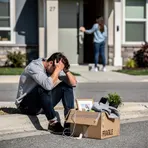
Push away also has a feeling meaning and it comes from the same picture: imagine someone using their hands or stepping back to keep another person at a distance. That's why it means 'to reject or keep someone at a distance', especially in feelings.