

to repulse
 7
7.0
7
7.0

- verb
- /rɪˈpʌls/
- Thanks to their strategic defense, they were able to repulse the siege and protect their city.
- repulse an attack
Loading YouTube…
Watch on YouTubeAnd we're also repulsed from, as he's going to say, the mistaking or non grasping of of reality.
- And we're also repulsed from, as he's going to say, the mistaking or non grasping of of reality.
Examples
-
By your courage and skill, you have repulsed every assault of the enemy.
Academic text (2007) -
The Spanish bastion changed hands twice, but ultimately the Ottomans were repulsed from the walls.
-
Charlemagne was able to repulse these raids and the English as well.
-
His attacks on our troops yesterday were repulsed.
Academic text (2007) -
The Indians made a sortie at us, but we repulsed them.
Fiction book (1997) -
In some cases, the natives repulsed us with barrages of stones and arrows.
-
Roger's attack was repulsed by the defenders, but by diverting the Muslims, it allowed Robert to climb the walls unnoticed.
Academic text (2010) -
The soldiers worked together to repulse the enemy's assault on their base.
-
In a surprising turn of events, the defenders managed to repulse the attackers after a fierce battle.
Synonyms
 97
3.9
97
3.9
Force a person or thing to move backward in body and feeling
 76
4.6
76
4.6
To turn attention away from a person or thing
 71
3.4
71
3.4
To force a person, animal, or feeling to go away
 68
2.7
68
2.7
To make people or animals go away by frightening them
 51
3.7
51
3.7
To keep away an attack, illness, or strong unwanted feeling
 47
2.5
47
2.5
Make a person or animal go away because they are afraid
 43
3.2
43
3.2
To stop other people from getting close to you emotionally
 34
4.4
34
4.4
To keep harmful or unpleasant things away from you
 34
3.9
34
3.9
Keep unwanted people or things away so they do not harm you
 21
4.2
21
4.2
Make someone or something move back and stay away, often by using force
 19
4.1
19
4.1
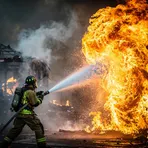
Force someone or something to move away from danger
 14
6.0
14
6.0
To force someone or something to move away
 10
4.9
10
4.9
Make people or things move backward by using strength and stop feelings by holding them back
 8
5.6
8
5.6
Act in a way that makes other people avoid you
 3
7.9
3
7.9
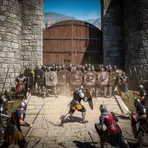
To drive back an attack or enemy force
 1
3.3
1
3.3
To make someone or something go away by making them afraid
 1
2.8
1
2.8
To make people or animals go away by scaring them
Antonyms


How Forceful
42
4.0
 7
7.0
19
4.1
97
3.9
34
3.9
34
4.4
7
7.0
19
4.1
97
3.9
34
3.9
34
4.4
Surface Forms
Morphology
Etymology
Repulse comes from old Latin parts re- 'back' and pellere 'to push', the same idea you see in propel. To repulse someone or an attack is to 'push them back' or force them away.