

to frighten off
 7
3.3

- phrasal verb
- /ˈfraɪtən ɔf/
- " Now you have surely frightened off the panther."
- frighten off any predators
Examples
-
He hoped that his angry shout would frighten off the stray dog growling at him.
-
Could they have been frightened off?
Fiction book (1993) -
Police believed he'd been frightened off by someone on the street, but no witnesses to the crime had yet come forward.
Fiction book (2001) -
Large dogs also frighten off would-be intruders.
Blog text (4) -
Far from summoning help, the uproar had probably frightened off every traveler for miles.
Fiction book (2001) -
Parents believe a hideous name will frighten off gnomes and trolls.
-
Mayhew Skinner is an accomplished actor who uses stagecraft to help frighten off the thieves and protect the Drear treasure.
Academic text (2016) -
The loud noise from the fireworks is enough to frighten off any nearby animals.
-
The officers used bright lights in an attempt to frighten off the intruders.
Synonyms
 165
4.9
To frighten someone so they do what you want
 108
5.6
Make someone less likely to do something by making them fear bad results
 104
4.4
To make someone feel strong dislike
 93
2.7
To make people or animals go away by frightening them
 77
2.5
Make a person or animal go away because they are afraid
 75
3.4
To force a person, animal, or feeling to go away
 41
3.9
Keep unwanted people or things away so they do not harm you
 38
4.4
To keep harmful or unpleasant things away from you
 18
3.3
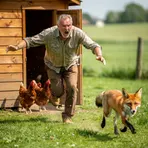
Make someone or something leave a place by running after and frightening them
 11
8.1
Make animals or people who attack you go away
 6
7.0
To make someone or something go away
 6
2.8
To make people or animals go away by scaring them
 3
5.4
Make a person or animal go away with words and gestures
 1
4.3
Make someone lose interest in doing something
Antonyms


How Scary

Surface Forms
Morphology
The meaning is directly compositional: 'frighten' means to induce fear and the particle 'off' conveys movement away or prevention, so together they yield 'make someone go away or not do something by causing fear.' This verb + particle pattern (e.g., 'scare off') is common and follows predictable English semantics, so a B1 learner who knows the parts will readily infer the meaning.
Etymology
The phrasal verb frighten off comes from the clear image of scaring someone until they move away: to frighten someone and send them off, like a barking dog that makes a thief run from a yard. So, it means 'make someone or something go away or not do something'.