

to shoo off
 1
5.4
1
5.4

- phrasal verb
- /ʃuː ɔf/
- She went out to the barn, stared a hen in the eye, and shooed the red one off her nest.
- try to shoo off
Examples
-
Why don't you shoo off now?
-
PATRICK tries to shoo her off.
Fiction book (2000) -
"Want me to shoo him off?" George asked.
Fiction book (2001) -
"I kept wanting to turn back, but Dad shooed me off and I played with the other kids.
Fiction book (2001) -
"And why not?" she said one night as she drank down the last of her tea before shooing them off to bed.
Fiction book (1998) -
"Shoo off the rocs," she ordered.
Fiction book (1998) -
After May Anna finished her speech and everybody left, her press agent came up and tried to shoo us off, but May Anna gave him a hard look.
Fiction book (1990) -
"Aunt Hen shooed the poodle off her lap.
Fiction book (1998) -
The other citizens all stared at me, kind of impatient, and I had to get my say in quick before Chevelier could shoo me off.
Fiction book (1990) -
"The farmer shooed off the ducks that wandered into the garden."
Synonyms
 68
2.7
68
2.7
To make people or animals go away by frightening them
 47
2.5
47
2.5
Make a person or animal go away because they are afraid
 35
7.0
35
7.0
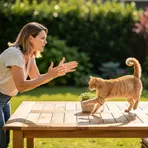
To make a person or animal move away, for example by waving
 6
3.3
6
3.3
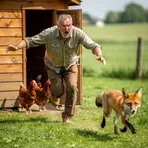
Make someone or something leave a place by running after and frightening them
 5
4.1
5
4.1
To make people or animals go away by waving your hand
 1
3.3
1
3.3
To make someone or something go away by making them afraid
Antonyms


How Forceful
77
4.6
 46
4.4
46
4.4
- Informal
6
6.7
87
4.0
1
5.4
43
3.0
Surface Forms
Morphology
The meaning 'to drive away' is directly and predictably composed from 'shoo' (to chase or repel) plus 'off' (away), so a learner who knows both words can infer the phrasal-verb sense. This verb+particle combination follows regular English compositional patterns (motion/away meaning) and is cross-linguistically transparent, making it immediately comprehensible at B1.
Etymology
The phrasal verb shoo off comes from the short shout shoo people used to make animals go away. The word off adds the idea of moving away, so shoo off means 'to drive away' someone or something.