

major
 23
6.5
23
6.5

- adjective
- /ˈmeɪdʒər/
- Specialized
- Start with tonic and dominant patterns in major and minor keys.
- major scale
- major key
- major chord
Loading YouTube…
Watch on YouTubeI can do D flat major over E major.
- I can do D flat major over E major.
- And then this is like, I think a major third.
- Everyone loves the major thirds da da, just like that.
Examples
-
I can do D flat major over E major.
-
It's even a A major now I think, right?
-
We're moving up minor thirds, D flat major, E major.
-
The first chord, E flat major, is in its most natural root position.
-
Now let's try the G-major scale.
-
Blues scales should also be introduced in various keys while working on the major scales.
Academic text (1994) -
Begin with one-chord songs and progress gradually to three-chord songs in major and minor.
Academic text (1997) -
By clicking on chord names, students can see fingerings and hear differences between major and minor chords.
Academic text (1999) -
Students echo, improvise, and read tonal patterns in major, minor, and other tonalities, such as Dorian and Mixolydian.
Academic text (1999) -
In music class, we learned how to play the C major scale, which sounds bright and cheerful.
Synonyms

A musical key or chord with a bright, happy sound
Antonyms

Compounds




- Specialized
12
4.0
A serious operation on the body that doctors do while you are asleep and that has more risk





- Specialized
1
3.7
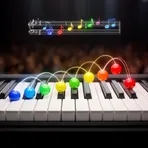
A set of seven notes with whole steps except half steps between the third and fourth and seventh and eighth

- Specialized
1
6.8
A senior soldier who helps run a group of soldiers and manages discipline and administration



- Specialized

 1
6.1
1
6.1
A period of severe sadness and loss of interest that makes daily life hard



- Specialized
1
7.4
A general statement that includes the main word in the conclusion, for example 'All humans are mortal'


- Specialized
1
9.2
A severe, common form of smallpox that often caused fever, many skin sores, and many deaths


- Archaic
An intense seizure when a person loses consciousness and their whole body shakes strongly

- Specialized
A garden plant with star-shaped white or pink flowers and leaves in a low clump

- Specialized
A serious mental illness that causes very low or very high mood

- Specialized
The longest straight line through an ellipse that passes through its two special inner points
- Specialized
A common eight-note pattern in Western music with small steps between third and fourth and seventh and eighth


- Specialized
A main group of words like nouns, verbs, and adjectives that show a word's role in a sentence





- Archaic
Strong medicine that calms people with serious mental illness like schizophrenia




- Specialized
A large chest muscle that pulls the arm toward the body and turns it inward

- Specialized
A back muscle that pulls the shoulder blade toward the spine

- Specialized
A muscle in the upper arm that pulls the arm back and turns it inward toward the body

- Specialized
A muscle in the upper back that pulls the shoulder blade toward the spine

- Specialized
A large chest muscle that helps move the arm toward the body and turn it




- Specialized
A thick round muscle in the upper back that turns the arm toward the body

- Specialized
A muscle in the upper back that moves the arm and turns it inward

- Specialized
A severe inherited blood disease that causes very low red blood cells and needs regular transfusions


- Specialized
A trailing evergreen plant with shiny green and white leaves and blue or purple flowers

- Formal
A strong natural event like an earthquake or flood that you cannot stop and that stops normal life
How Bright
- Specialized
23
6.5

- Specialized
16
7.4
Surface Forms
Etymology
Major in music comes from the Latin maior meaning 'greater' and was used to name the scale that sounds 'brighter' or more open than a 'minor' scale. So a piece in a major key usually feels happier or stronger.