

variola major


 1
9.2
1
9.2
- noun
- /ˌværiˈoʊlə ˈmeɪdʒər/
- Specialized
- The historical impact of variola major on populations was devastating, leading to high mortality rates.
Examples
-
Variola major is the more severe form of variola major that can be fatal to those infected.
-
And that is that there were three species of the genus of Orthopox viruses, Variola major, Variola minor and cowpox.
-
But we'll be concerned exclusively here with variola major, the main cause of smallpox historically.
-
Infected individuals often show symptoms of variola major, including fever and skin eruptions.
Synonyms
 77
3.9
77
3.9
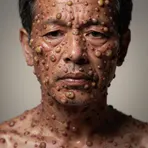
A very contagious disease that causes fever and many skin sores that leave scars
 3
3.9
3
3.9
A tiny germ that causes the serious disease smallpox in people
 1
9.9
1
9.9
A serious contagious viral disease that causes fever, a rash with pus-filled bumps, and can be fatal
 1
5.9
1
5.9
A very small germ that causes smallpox in people
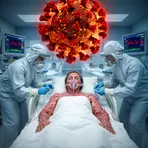
A very deadly form of smallpox that often causes death
Surface Forms
Morphology
The term combines the disease noun 'variola' with the adjective 'major' that denotes greater severity or importance, so the meaning 'the more severe form of smallpox' is directly inferable from its parts. This degree-marking pattern (X major = more severe variant) is common in medical and cross-linguistic usage, making the compound understandable to a B1 learner who knows both constituents.
Etymology
Variola major comes from old Latin words. variola meant 'pimple' or 'pox' and major meant 'bigger' or 'more serious', so the name was used for the heavier, more deadly form of 'smallpox'.