

variola major virus
- noun
- /ˌværiˈoʊlə ˈmeɪdʒər ˈvaɪrəs/
- Specialized
- Before the eradication of smallpox, variola major virus caused devastating epidemics worldwide.
Examples
-
Researchers studied the variola major virus to understand what made it so deadly compared to other strains.
-
The discovery of a vaccine significantly reduced the threat posed by the variola major virus.
-
The variola major virus caused widespread outbreaks in the past.
-
Can the variola major virus be eradicated completely?
-
Before the eradication of smallpox, the variola major virus caused devastating epidemics worldwide.
-
Researchers studied the variola major virus to understand its unique virulence compared to other strains.
-
The discovery of a vaccine significantly reduced the danger posed by the variola major virus.
Synonyms
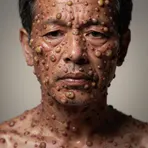
 77
3.9
77
3.9

A very contagious disease that causes fever and many skin sores that leave scars
 3
3.9
3
3.9
A tiny germ that causes the serious disease smallpox in people
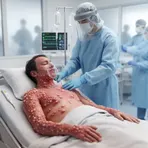 1
9.9
1
9.9
A serious contagious viral disease that causes fever, a rash with pus-filled bumps, and can be fatal


 1
5.9
1
5.9
A very small germ that causes smallpox in people
 1
9.2
1
9.2
A severe, common form of smallpox that often caused fever, many skin sores, and many deaths
How Severe
- Specialized

- Specialized
77
3.9
- Archaic
- Specialized
Surface Forms
Morphology
The phrase is transparently compositional: 'variola' denotes the smallpox disease, 'major' marks the more severe form, and 'virus' names the pathogen, so together they mean a more severe type of the smallpox virus. Although technical, the modifier + noun + noun structure follows normal naming conventions (especially in biomedical contexts), so a B1 learner who knows the constituents can infer the meaning.
Etymology
Variola major virus comes from old Latin words: variola meant 'spotted' because the illness makes many skin spots, and major meant 'greater' or 'more severe'. So the name points to the more 'deadly' form of 'smallpox'.