

musculus teres major
- noun
- /ˈmʌskjələs ˈtɛrɪs ˈmeɪdʒər/
- Specialized
- The musculus teres major works together with other muscles to help rotate the arm inward.
Examples
-
Physical therapists may target the musculus teres major during rehabilitation exercises for rotator cuff injuries.
-
Injury to the musculus teres major can limit the range of motion in your shoulder.
-
The musculus teres major is essential for shoulder mobility.
-
During the workout, I felt strain in my musculus teres major.
-
Injury to the musculus teres major can limit the range of motion in your shoulder.
-
Physical therapists may target the musculus teres major during rehabilitation exercises for rotator cuff injuries.
-
The musculus teres major works together with other muscles to help rotate the arm inward.
Synonyms

A thick round muscle in the upper back that turns the arm toward the body
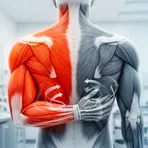
A muscle in the upper back that moves the arm and turns it inward
Surface Forms
Morphology
The phrase is compositionally built from anatomical Latin elements: 'musculus' (muscle) + 'teres' (a shoulder-region muscle) + 'major' (larger), so a learner who knows those constituents can infer it is the larger teres muscle in the shoulder. However, the precise functional description (specifically moving the arm backward and rotating it inward) is specialized anatomical knowledge not directly predictable from the parts, so the transparency is partial.
Etymology
Musculus teres major gets its name from Latin words that describe how it looks and moves: musculus means 'little mouse' because old doctors thought a moving muscle under the skin looked like a mouse, teres means 'rounded', and major means 'larger'. So the name creates the image of a larger, rounded muscle that pulls the arm back and turns it toward the body, which explains its function today.

