
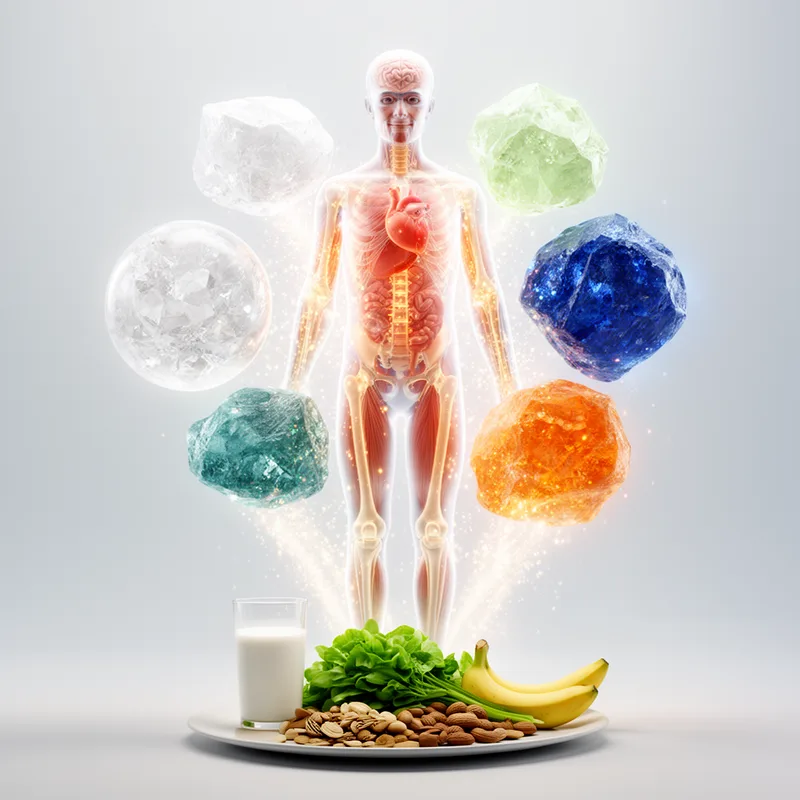
major mineral
- noun
- /ˈmeɪdʒər ˈmɪnərəl/
- Specialized
- Calcium is a major mineral that is essential for building strong bones and teeth.
Examples
-
Nutritionists often distinguish between trace elements and major minerals when discussing dietary requirements.
-
Potassium is another important major mineral found in bananas.
-
A balanced diet should include all the essential major minerals for optimal health.
-
Calcium is considered a major mineral because the body needs it in relatively large quantities.
-
Calcium is an essential major mineral for bone health.
-
Potassium, a major mineral, plays a crucial role in regulating fluid balance in the body.
-
Magnesium, one of the important major minerals, is needed for muscle function and energy production.
Synonyms

An element the body needs in large amounts to stay healthy
How Much


Surface Forms
Morphology
The phrase is compositionally built from 'major' (important/large) + 'mineral' (an inorganic nutrient), so a learner who knows both words can infer it refers to an important or abundant type of mineral. However, the specific nutritional nuance — that it means minerals required in relatively large dietary amounts — is somewhat technical and may not be fully predictable from the constituents alone.
Etymology
Major mineral comes from nutrition: major means 'needed in larger amounts' and mineral means a natural nutrient the body uses. Think of a big jar of salt as a major mineral and a tiny spice jar for smaller needs, so major mineral means a mineral the body needs in relatively large quantities.