
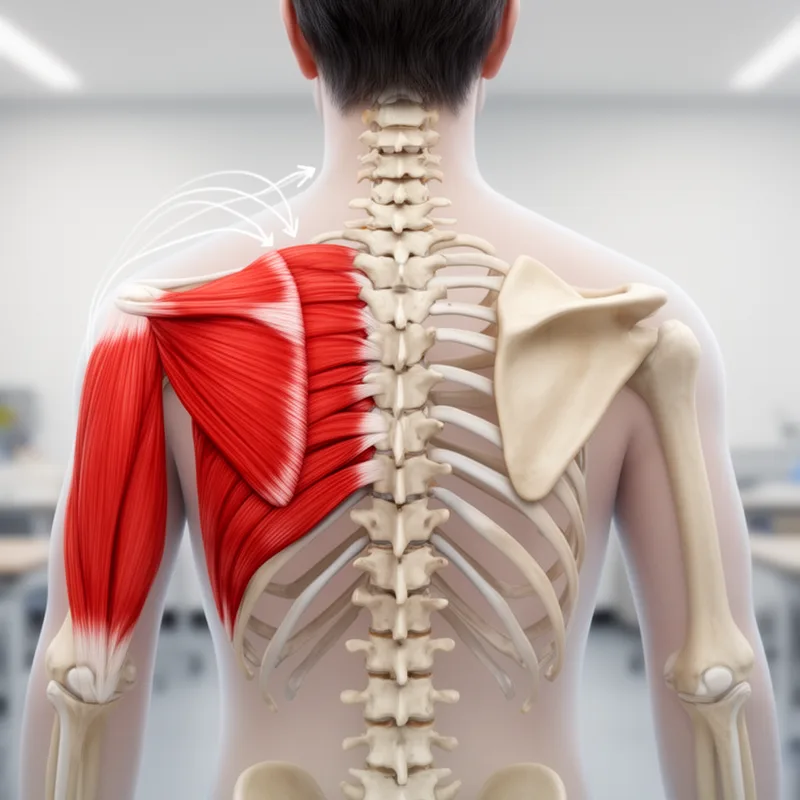
musculus rhomboideus major
- noun
- /ˈmʌskjələs ˌrɒmˈbɔɪdiəs ˈmeɪdʒər/
- Specialized
- The musculus rhomboideus major pulls the shoulder blade closer to the spine during movements like rowing.
Examples
-
The physical therapist recommended exercises to strengthen the musculus rhomboideus major.
-
During anatomy class, we learned how the musculus rhomboideus major helps stabilize the scapula.
-
An injury to the musculus rhomboideus major can cause pain and restrict shoulder movement.
-
The musculus rhomboideus major helps stabilize the shoulder blade.
-
During the workout, I felt strain in my musculus rhomboideus major.
-
In functional anatomy, the musculus rhomboideus major is essential for maintaining good posture.
-
Stretching the musculus rhomboideus major can help alleviate upper back tension after a long day of sitting.
Synonyms



 1
9.7
1
9.7
One of two muscles in the upper back that help move the shoulder blade

A muscle in the upper back that pulls the shoulder blade toward the spine

A muscle in the upper back that pulls the shoulder blade toward the spine

A muscle in the upper back between the spine and shoulder blade that helps move and hold it
Surface Forms
Morphology
musculus + rhomboideus + major
The term is built from Latin anatomical morphemes: 'musculus' (muscle) + 'rhomboideus' (rhomboid-shaped) + 'major' (larger), so the overall meaning ‘the larger rhomboid muscle’ is derivable from its parts and follows cross-linguistic anatomical naming patterns. However, the central element 'rhomboideus' is technical/Latinized and likely unfamiliar to a B1 learner, so the relation is only partly transparent without domain knowledge.
Etymology
Musculus rhomboideus major is a Latin name that gives a clear picture: musculus means 'muscle', rhomboideus means 'diamond-shaped', and major means 'larger'. The name points to a big, diamond-shaped muscle in the upper back that pulls the shoulder blade toward the spine, so the name fits its job.