
Pinus
 1
8.2
1
8.2

- noun
- /ˈpaɪnəs/
- Specialized
- Nut Pines (Pinus spp).
- Pinus pine
Examples
-
It is the story of twin pines: the Native American tuwa and its twin, the "digger" pine, Pinus sabiniana, of European perception.
Academic text (2000) -
For example, public and private entities across several southeastern states participate in regional collaborations, such as the Longleaf Alliance, which promotes conservation of longleaf pine (Pinus palustris) ecosystems.
Academic text (2012) -
The attempt has been keeping since the female pinus to rectangular restrictions.
Blog text (21) -
This right here is a Pinus Mugo Jacobson.
-
The site included his house, a nearly pure stand of secondary growth yellow pine (Pinus ponderosa), and several large rock outcrops.
Academic text (2015) -
For example, hundreds of thousands of acres of forest plantations have been established in Australia to grow the exotic Monterey pine (Pinus radiata).
Academic text (1990) -
There has long been a misconception that Pinus palustris is the dominant upland tree in undisturbed coastal plain forests.
Academic text (1994) -
Just before the international forum opened, the Russian government took a step toward protecting entire landscapes and individual sites: it announced a ban on cutting down Korean pines (Pinus koraiensis).
Academic text (2011) -
In the southeastern United States, loblolly pine (Pinus taeda L.) plantations are the most abundant and intensively managed plantation types.
Academic text (2017) -
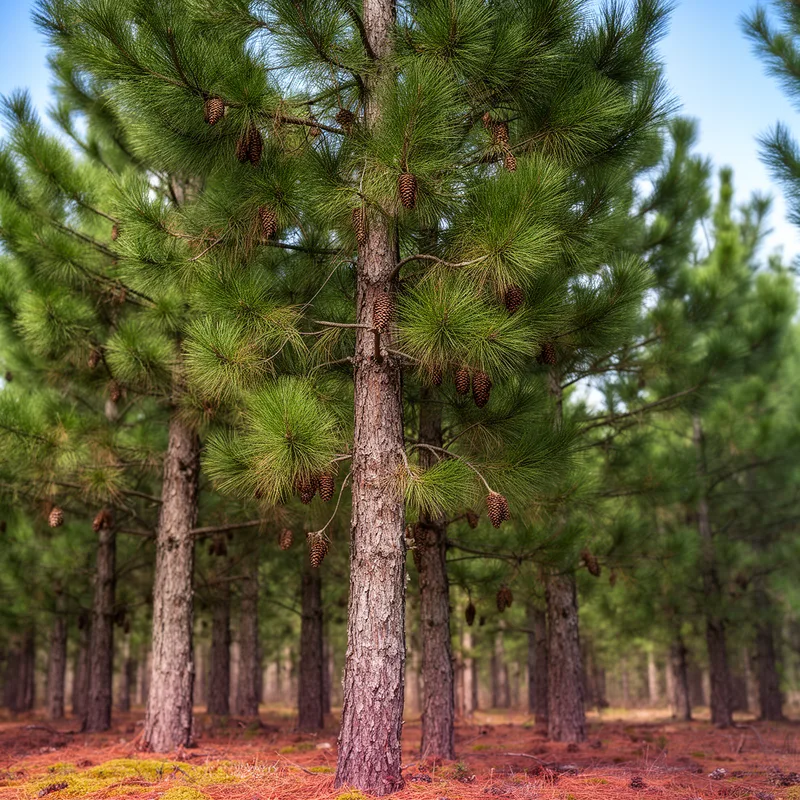
The tall Pinus trees provide shade and shelter in the forest.
Compounds
- Specialized

 1
9.9
1
9.9
A pine tree from the northwest coast of California, often with two or three needles together
- Specialized
1
7.7
A tall pine tree from eastern North America with soft needles and light wood used for building
- Specialized
A medium-sized pine from the US Pacific coast with three-needle clusters and cones with knobs on each scale

- Specialized
A medium pine tree from eastern North America with pairs of yellow-green needles and rough bark

- Specialized
A high mountain pine from western North America with white bark and groups of five needles


- Specialized
A pine tree from Japan and Korea often grown for its pretty, spreading shape
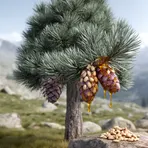
- Specialized
A large European pine with clusters of five needles that makes edible nuts and sticky resin
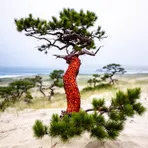
- Specialized
A pine tree from the northwest coast of North America with needles in pairs and reddish scaly bark

- Specialized
A very old pine tree from western United States mountains that can live for thousands of years
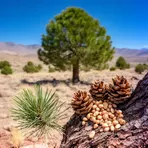

- Specialized
A tall pine tree from western North America with blue-green needles and scaly grey-brown bark
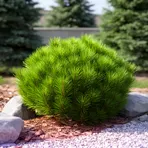
- Specialized
A low, bushy pine with short bright green needles in pairs often used in gardens

- Specialized
A large pine tree from southeastern Europe with dark bark and pairs of long needles used for timber

- Specialized
A large pine tree from the southeastern United States with short needles in pairs or threes and reddish brown bark
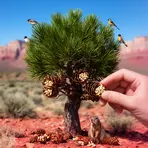
- Specialized
A small pine tree in the southwestern United States with edible seeds called pine nuts

- Specialized
A tall pine tree with long blue-green needles in groups of three and long cones

- Specialized
A tall pine tree of the southeastern United States with long needles and strong wood

- Specialized
A small pine tree with groups of five needles from California and Baja California, sometimes with three or four needles

- Specialized
A large pine tree with groups of three needles that grows in wet sandy swamps in the southeastern United States

- Specialized
A medium-sized pine tree from northwestern Mexico with dark brown bark and deep lines when mature
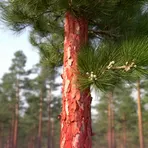
- Specialized
A tall pine tree that has two needles in each bundle and flaky red-brown bark

- Specialized
A medium-sized pine tree with an umbrella-shaped top that makes edible seeds called pine nuts

- Specialized
A tall pine tree from western North America with dark green needles in small groups and thick dark brown bark

- Specialized
A small Appalachian pine with two thin needles per bundle and cones with pointed thorn-like scales

- Specialized
A pine tree from southern California and northern Baja California with groups of four or five needles


- Specialized
A pine tree from eastern North America with long needles in pairs and red bark

- Specialized
A large pine tree with groups of three needles that grows in eastern North America

- Specialized
A medium-sized pine tree from southern California with five needles in each group and long cones
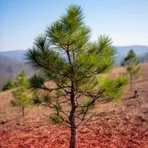
- Specialized
A small pine tree from the eastern United States that often has twisted branches and short needles in pairs

Surface Forms
Etymology
The word Pinus comes from the Latin word pinus, meaning 'pine tree'. So scientists use Pinus as the name for the group of trees we call pine, the familiar trees with long needles and pinecones.