
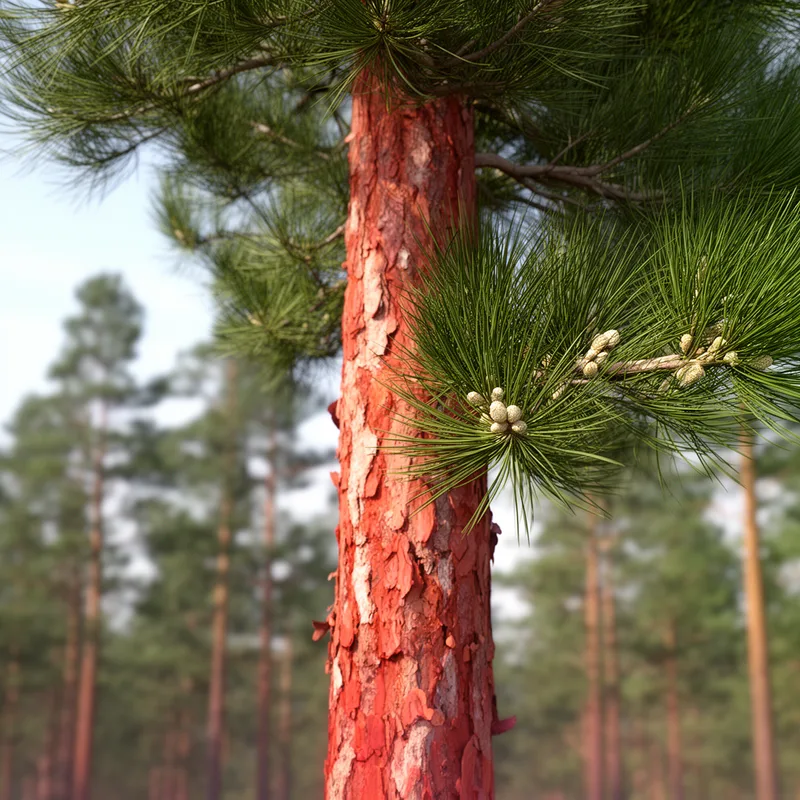
Pinus sylvestris
- noun
- Specialized
- The Pinus sylvestris is commonly known as the Scots pine.
Examples
-
The vast forests of northern Europe are dominated by Pinus sylvestris.
-
The timber from Pinus sylvestris is prized for its strength and durability.
-
Botanists studied the unique bark patterns of Pinus sylvestris trees found in Siberia.
-
In many forests, Pinus sylvestris dominates the landscape.
-
The Pinus sylvestris is commonly known as Scots pine, which thrives in various types of soil.
-
In the forest, the tall Pinus sylvestris trees stand out with their flaky red-brown bark.
-
You can identify Pinus sylvestris by its two needles per bundle and its distinctive bark.
Synonyms


 1
6.4
1
6.4
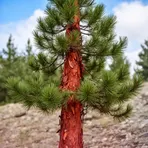
A medium to large pine tree with two needles per cluster and reddish brown flaky bark

A pine tree with reddish-brown flaky bark and pairs of needles that grows in northern Europe and Asia
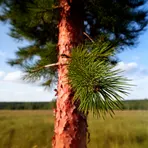
A medium large pine tree from northern Europe and Asia with two needles on each leaf and red-brown flaky bark
Surface Forms
Morphology
Pinus + sylvestris
The first element 'Pinus' clearly marks a pine genus, so a learner who knows that could infer the phrase refers to a kind of pine tree; however the second element 'sylvestris' is a Latin species epithet (not listed in the dictionary) and its precise meaning ('of the woods' / specific species identity) is unlikely to be known by a B1 learner. Because part of the meaning (that it denotes a pine species) is clear from constituents but the species-specific sense requires knowledge of Latin binomial conventions or the epithet, the expression is only partially transparent.
Etymology
The scientific name Pinus sylvestris comes from old Latin words: Pinus means 'pine' and sylvestris means 'of the woods'. That's why the name means 'pine of the woods' and fits this common forest tree found across northern Europe and Asia.