

Pinus edulis
- noun
- /ˈpaɪnəs ˈɛdʒʊlɪs/
- Specialized
- The seeds of the Pinus edulis are harvested and sold as pine nuts across the United States.
Examples
-
Many birds and small mammals rely on the Pinus edulis for both food and shelter in arid landscapes.
-
Many chefs love using Pinus edulis seeds in their dishes.
-
Due to climate change, the distribution of Pinus edulis may shift northward in the coming decades.
-
The Pinus edulis tree is often found in Arizona.
-
The seeds of the Pinus edulis are prized for their rich flavor and are often used in gourmet recipes.
-
Many birds and small mammals rely on the Pinus edulis for food and shelter in the desert.
-
During the fall, the Pinus edulis tree produces edible seeds that attract wildlife.
Synonyms
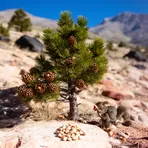
A small pine tree that grows on dry rocky slopes and makes nuts people can eat
Surface Forms
Morphology
Pinus + edulis
The name is a Latin binomial combining 'Pinus' (the pine genus) with the epithet 'edulis' (Latin for 'edible'), so a learner who knows those constituents could infer it refers to an edible pine species. However, 'edulis' is a non‑English, technical Latin term and taxonomic names function as proper nouns, so the exact referent and nuance (e.g. valued for pine nuts) are not fully predictable to an average B1 learner.
Etymology
Pinus edulis comes from Latin words: Pinus means 'pine' and edulis means 'edible', because people eat the tree's seeds (pine nuts). That's why the name fits this small pine from the southwestern United States that is valued for its edible seeds.

