
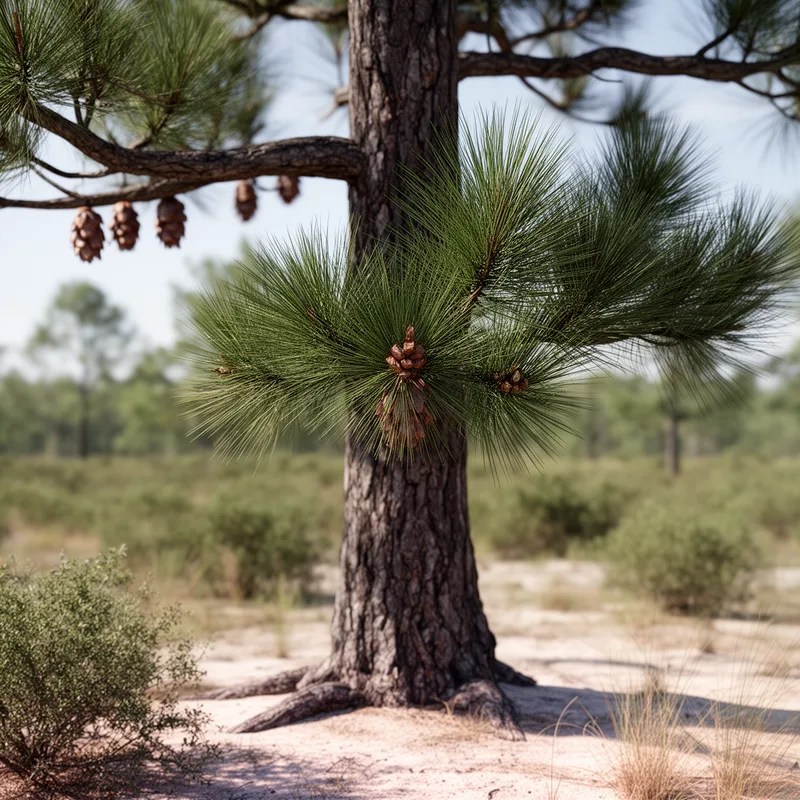
Pinus rigida
- noun
- /ˈpaɪnəs ˈrɪdʒɪdə/
- Specialized
- Many restoration projects in New Jersey use Pinus rigida to recreate natural pine barrens.
Examples
-
The Pinus rigida is well adapted to poor, sandy soils in its native range.
-
Botanists studied the cones and bark of the Pinus rigida for signs of disease.
-
The Pinus rigida thrives in sandy soils.
-
Many Pinus rigidas can be found in New Jersey.
-
Many restoration projects in New Jersey use Pinus rigida to recreate natural pine barrens.
-
The Pinus rigida is well adapted to poor, sandy soils in its native range.
-
Botanists studied the cones and bark of the Pinus rigida for signs of disease.
Synonyms


 1
5.8
1
5.8
A large pine tree from eastern North America that people use for its wood and sticky sap
How Big

Surface Forms
Morphology
Pinus + rigida
A learner who knows 'Pinus' can infer this refers to a pine (genus of pines), so they will get the general idea that it names a type of pine tree. However 'rigida' is a Latin species epithet (not a common English word and here not defined), and the precise species identity and properties are technical and function as a proper name, so the full meaning is not predictable from everyday English knowledge.
Etymology
Pinus rigida comes from Latin: Pinus means 'pine' and rigida means 'stiff' or 'rigid', a note about its tough bark and stiff, three-needled leaves. So the scientific name points to a large, hardy tree often called 'pitch pine'.